Phoenix Mobile Home Owners Face Displacement as Developers Claim Park Land
Residents of Periwinkle Mobile Home Park and two other Phoenix-area communities say they have nowhere to go as landowners push them out, while the city weighs ways to protect vulnerable homeowners.
By Juan Gonzalez ·
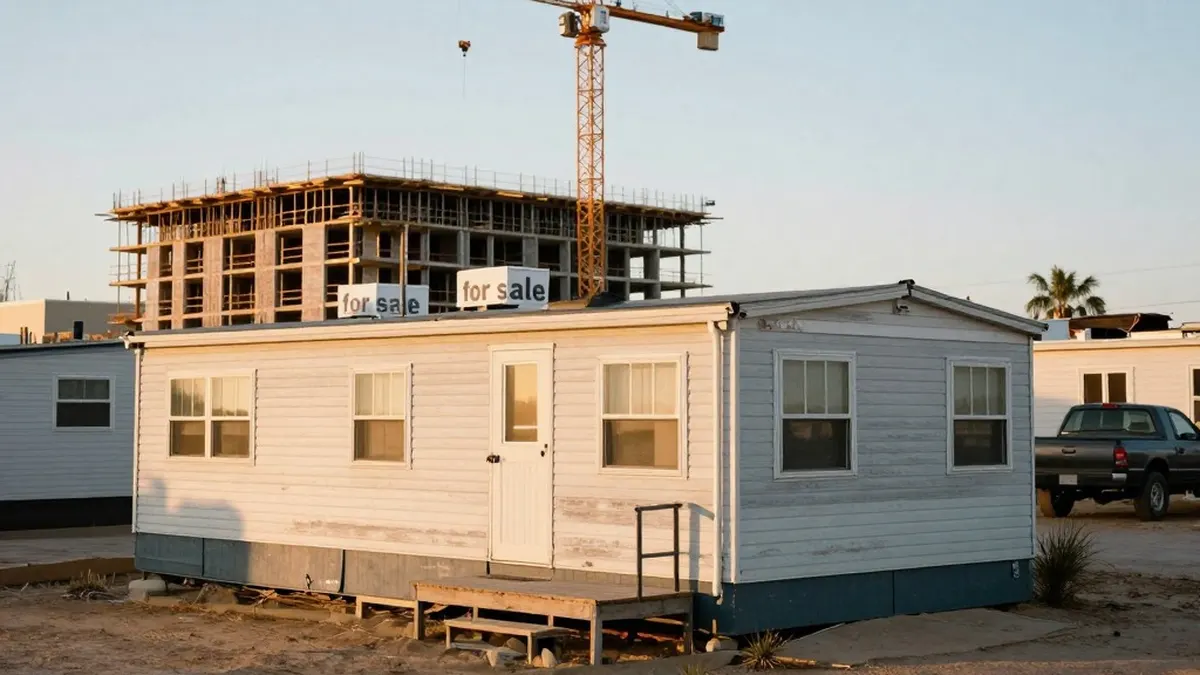
Owning a home but being told to move it, with nowhere to take it, is the situation facing some metro Phoenix residents as developers purchase mobile home parks. Residents who own their homes but rent the land beneath them are especially exposed.
At Periwinkle Mobile Home Park, near 27th Avenue and Camelback Road, construction crews are building apartments for Grand Canyon University students while longtime residents wonder where they will live. Alondra Ruiz, who owns her home with her husband, said reading the notice she received in April was "very painful." Under state law, residents were given six months to leave. The university owns the land and wants to add student housing.
After residents held marches and drew the attention of a City Council member and a state senator, GCU pushed the deadline back twice. It now stands at May 28. The university said it will pay each mobile home owner $5,000 to relocate, with larger payments for those who leave earlier. Those who stay until May will not owe the $400 monthly rent from January through May. GCU also said it has donated money to Habitat for Humanity so tenants can have repairs made to their homes, depending on what the organization is able to fix.
Resident Jerry Suter, 83, has lived at Periwinkle for 28 years. He said the campus has grown enough already, noting that he counted 26 buildings nearby. He values the close community, recalling that Ruiz took him to the hospital when he had a heart attack earlier this year. By contrast, he said, he never got to know his neighbors during five years in an apartment on Camelback.
Residents have taken their concerns to city leaders. In September, the Phoenix City Council unanimously approved nearly $1 million for churches to run emergency shelters for people experiencing homelessness, and Mayor Kate Gallego said the city has committed more than $100 million to housing and homeless services over the past three months. Roughly 40 minutes later, several mobile home owners used public comment to ask for an emergency response. One resident said, "We are going to be homeless." In October, residents of Periwinkle, Las Casitas and Weldon Court parks protested outside council chambers.
Other cities have acted to protect such communities. Austin, Portland and Kenmore, Washington, have rezoned parks to make closures harder for developers. Colorado requires 12 months' notice of a closure and gives homeowners a chance to buy the park, as do 19 other states, but Arizona does not.
Arizona does offer relocation assistance, but many homes, including Ruiz's, were built before federal standards took effect and are too old for other parks to accept. The alternative is to abandon the home and collect $1,875. Ruiz said she has found nothing she can afford or that is available. "They have every legal right," she said, "but is it moral to move us?"
Federal guidelines classify 46% of Phoenix households as extremely low, very low or low income, and another 19% as low to moderate. In 2020, the city set a goal of creating or preserving 50,000 housing units by 2030. As of November 7, 2022, it reported 25,157 had been created or preserved, including 17,717 market-rate, 3,581 workforce and 3,859 affordable units. The city does not publicly track homes lost, such as the 50 at Periwinkle.
City Manager Jeff Barton has set up a task force to study how to preserve housing for the city's most vulnerable homeowners, and the council is expected to discuss its findings this month. The distinction between the terms matters here: homes built before 1976, when HUD's federal construction and safety standards took effect, are called mobile homes, while later ones are manufactured homes.
Source: KJZZ