Rising Costs: How Virginia's Small Business Owners and Workers Manage Inflation
In Tappahannock and Richmond County, rising input costs and wage pressures force local businesses and families to adopt strict budgeting strategies ahead of the midterms.
By Evelyn Henderson ·
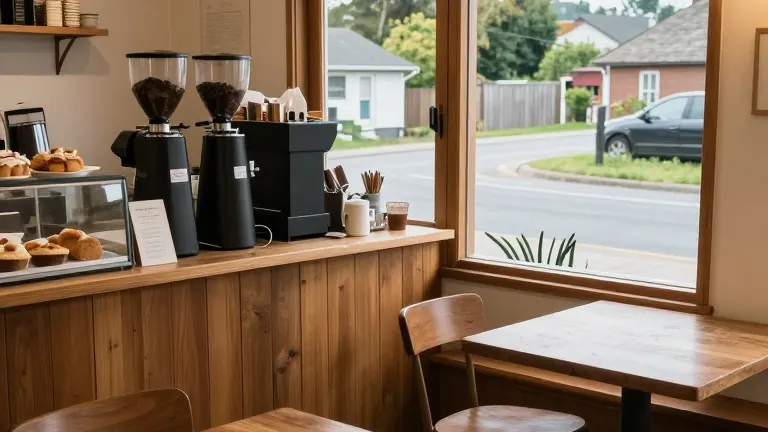
Jeans Owens operates Java Jacks, a coffee shop in Tappahannock, Virginia, that she and her husband purchased approximately eight years ago. The business, which began in 2006, sells savory sausage, sugar-dusted beignets, and merchandise. Owens states that the couple took over the operation to become their own bosses and improve their financial security for retirement. The first years of ownership coincided with the pandemic and subsequent inflation, creating financial strain for the small business.
Input costs for the cafe have increased sharply. Owens notes that coffee prices have risen by more than 30 percent since 2022. The cost of beef, sausage, and paper products has also climbed. To-go boxes that cost 12 cents previously now cost nearly 30 cents. The combined cost for a cup, lid, and straw has jumped from roughly 3 cents to more than 20 cents. Additionally, the monthly electricity bill, which typically ranged between $450 and $500, has recently exceeded $1,000.
To maintain affordability, Owens keeps some menu items at $10. She has adjusted her purchasing habits to reduce expenses. She buys milk and juice from Walmart early in the morning instead of using a supplier. She purchases fresh fruit from a local grocery store. She also monitors pricing across three different suppliers and switches vendors based on which offers the lowest cost.
Customer behavior has shifted in response to higher prices. Owens observes an increase in senior citizens splitting orders, a trend that was rare when she acquired the business. She also notes fluctuations in tipping. While the small, intimate atmosphere of the cafe usually results in generous tips, tips decreased during periods of high gasoline prices. Tipping habits improved when gas prices fell.
Staffing remains the primary challenge for Owens. She owns a second coffee location in Warsaw, across the river. She has been short-staffed at both locations for months. Rising rents in the rural area, where the median income is approximately $50,000 annually, make it difficult for employees to find housing. Owens has assisted workers in finding apartments and has temporarily housed them in motels. Transportation is another hurdle, as some employees lack vehicles or face high fuel costs. Currently, five employees carpool to work. Owens has taken on kitchen shifts to cover for missing staff, delaying front-of-house duties and paperwork until evenings or days off.
Jameka Campbell works in Richmond County, just across the river from Tappahannock. She holds two positions: office manager at Menokin, a historical site, and community outreach director for the nonprofit Just Harvest Va. Campbell raises two children and manages her household budget through strategic shopping. She uses the Walgreens app to track coupons and rewards. Her goal is to spend $100 once a month on household supplies. She buys in bulk when items are discounted, such as laundry detergent that is frequently sold with a buy-one-get-two-free promotion.
Campbell applies reward points from one transaction to the next to maximize savings. During a recent shopping trip, she purchased toilet paper, tissues, cleaning supplies, and personal care items for a total of $60.04. She saved $27.71 through discounts and rewards. She estimates that this amount is equivalent to a meal or a quarter tank of gas.
Campbell tracks the candidates in the upcoming midterm election for Virginia's 1st Congressional District. The race features Republican incumbent Rob Wittman and Democrat Shannon Taylor. Campbell plans to research the candidates' past actions and personal finances. She intends to examine their property ownership and living situations to determine if they represent the economic reality of her district. She will make her voting decision closer to election day. For now, she describes her financial status as being in between rich and poor, noting that her economic position can change rapidly depending on her employment and daily expenses.
Owens, who is running for the non-partisan town council, says she wants the winner of the congressional race to understand the difficulties facing small businesses. She describes the current situation as a struggle. Campbell believes politicians need to engage directly with the grocery store to understand current prices, rather than relying on others to make purchases for them. Both women cite the high cost of living as a central factor in their daily decisions and political considerations.
Source: WBAA
More Business · Consumer Watch · Report a business · Got a Story?