2,000 miles apart, these challengers face 80% safe seats
Democrats in Wyoming and Republicans in Connecticut are spending limited funds to contest districts that have produced single-party results for decades.
By Lucas Chen ·
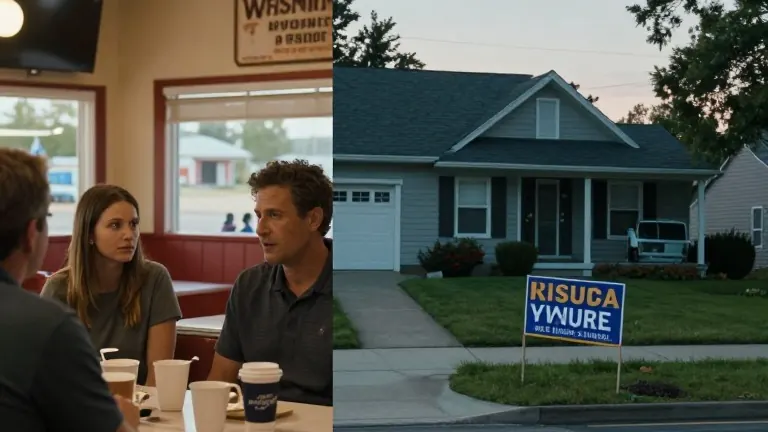
Lisa Kinney and George Austin are running against the political grain in districts that are nearly impossible to win. Kinney, a former state senator, is the Democratic challenger in Wyoming’s single House seat, which has elected only Republicans since the late 1970s. Austin, a home builder and former football coach, is the Republican candidate in Connecticut’s second congressional district, where Democrats have won 45 consecutive House elections since 2008. Both candidates face steep odds in a cycle where 80% of congressional races are rated solid for one party or the other.
The financial burden of these campaigns falls heavily on the candidates themselves. Austin has invested a quarter of a million of his own dollars into his race. He serves as his own scheduler and volunteer coordinator. Kinney operates without a dedicated campaign office. She relies on a small group of helpers and spends countless hours traveling across the state to meet voters in person. She believes that face-to-face contact makes people more comfortable voting for her, even when the party label suggests otherwise.
Voters in both states often sort themselves geographically, creating deep partisan entrenchment. Eric Ostermeier, founder of the nonpartisan site Smart Politics, notes that 19 state delegations currently consist entirely of members from the same party. He identifies this as a high watermark not seen since 1953. Ostermeier explains that gerrymandering dilutes minority voting strength, but voters also self-sort by location. State candidates struggle to separate their local identity from the national party brand. Kinney says she is a moderate Wyomingite, but opponents place her next to progressive figures in advertisements. Austin finds that conversations often end when voters realize he is a Republican or when President Trump comes up.
The candidates argue that these races matter beyond the immediate election results. Kinney says a loss would still strengthen the Democratic party in Wyoming. Austin wants to show other working individuals that challenging entrenched incumbents is worthwhile. In Connecticut, 46 of 187 state legislative seats are uncontested, a trend Austin cites as a reason to run. He aims to restore balance and demonstrate that regular citizens can make a difference, even when the statistical likelihood of victory is low.
Both candidates describe the process as exhausting but necessary. Kinney calls herself a realist who knows many voters will choose the candidate with an 'R' next to their name, yet she maintains she can win. Austin warns that the race requires the right motivation because candidates lose a great deal of sleep. He states that one cannot simply give a casual effort to a contest that is often perceived as lost. The effort to contest these safe districts is a direct response to the lack of variety in representation across the country.
Source: WBAA