Apple iPod Legacy: Marking 25 Years Since the Original Launch
The 2001 release of the 5GB portable music player reshaped how consumers carried their audio libraries before the smartphone era took hold.
By Lucas Chen ·
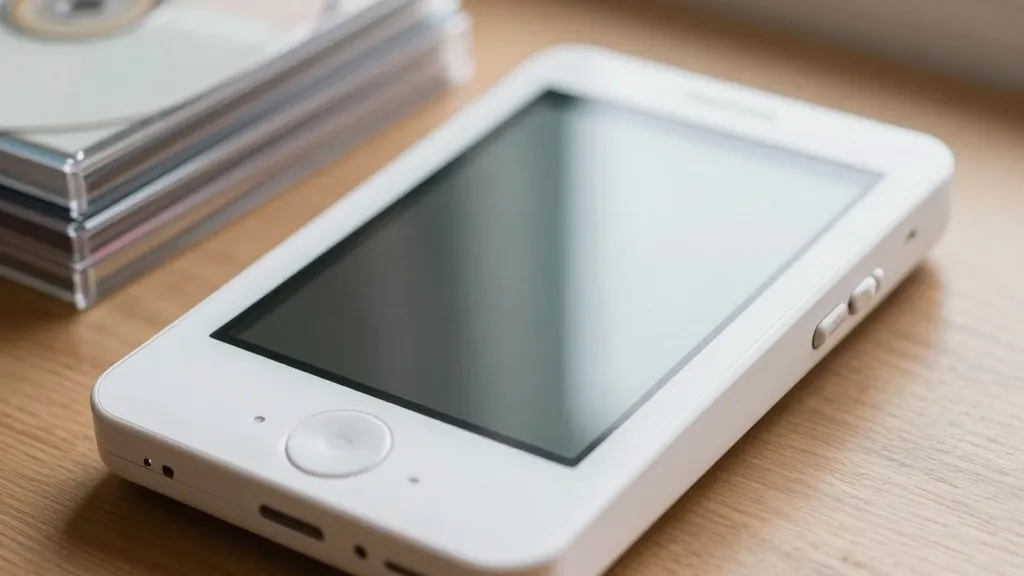
Apple Inc. unveiled the original iPod on October 23, 2001, marking a significant moment in consumer electronics history. At the time, the device was a pocket-sized digital music player that offered 5GB of storage for a price of $399. The primary selling point was the ability to hold 1,000 songs, a claim that positioned the device as a complete portable music library for the average consumer.
The launch occurred during a period of significant corporate recovery for Apple. CEO Steve Jobs had successfully guided the company through a difficult post-dot-com bubble era by establishing the Mac OS X platform. Products such as the iBook and iMac were well established and performing well in the market. Jobs envisioned the Mac as the central hub for a digital lifestyle, connecting various devices including digital cameras, camcorders, and DVD players. He identified portable music as a major target market that lacked a definitive leader, despite the presence of competitors like Sony, Creative, and Sonic Blue.
Jobs argued that existing players had not yet found the right formula for digital music. He noted that the market at the time was divided among CD players, MP3 CD players, flash memory players, and hard drive based jukebox players. Apple chose to enter the market with a hard drive based solution. The device was introduced as an MP3 player capable of handling popular formats of the day, including MP3, WAV, and AIFF, while delivering CD-quality sound. The 5GB capacity was specifically designed to accommodate 1,000 typical pop songs encoded at 160Kbps.
The physical design of the device relied on a new ultra-compact hard drive from Toshiba. This component measured 1.8 inches in diameter and 0.2 inches in thickness, allowing Apple to create a device the size of a standard deck of cards. The dimensions were 2.4 by 4 by 0.78 inches, and the unit weighed 6.5 ounces. Jobs emphasized that the device was lighter than most cell phones of that era, making it highly portable and desirable to consumers.
Connectivity was a major differentiator for the original iPod. It used a single FireWire 400 cable for both data transfer and charging. Jobs claimed this connection was significantly faster than USB standards of the time. He stated that an entire CD of music could be transferred in five to 10 seconds, whereas a USB connection would take approximately five minutes for the same data. For a full library of 1,000 songs, the FireWire connection required about 10 minutes, compared to five hours for a USB device. The device also featured a rechargeable lithium-polymer battery that provided 10 hours of continuous playback and could reach 80% charge in one hour.
The user interface was designed for ease of use with a special scroll wheel that used a piezoelectric clicker for tactile feedback. This allowed users to navigate by playlist, artist, or song with one hand. During the unveiling, Jobs demonstrated the device by playing the song 'Building a Mystery' by Sarah McLachlan. The launch also coincided with the release of iTunes 2, which included features like MP3 CD burning and Auto-Sync. This feature ensured that music libraries curated on a Mac would remain synchronized with the iPod whenever the device was connected.
The original iPod remained a staple in the Apple product line for over a decade, sitting alongside the iPhone which launched in early 2007. While the iPhone eventually made dedicated music players less necessary, the iPod continued to evolve. The final model, the 7th-generation iPod Touch, was released in May 2019. Although the product line was left without updates for several years, it was officially discontinued in May 2022. Today, the device is remembered as a transformative gadget that defined a generation of personal media consumption.
Source: Tom's Hardware · original report published