Microsoft CEO Mustafa Suleyman claims AI diagnostic panel outperforms generalist physicians
A new study suggests Microsoft's multi-agent AI system can handle complex medical cases with significantly higher accuracy than individual doctors, though experts note the comparison excludes specialist teams.
By Haruka Ricci ·
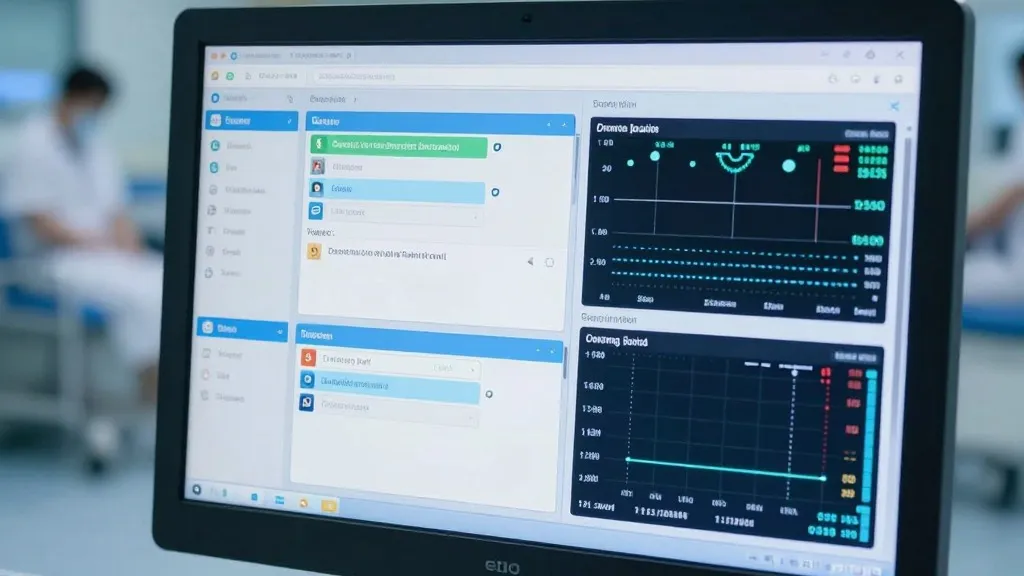
The central tension in modern healthcare is a widening gap between the demand for medical expertise and the available supply of doctors. Microsoft argues its new AI diagnostic system, known as MAI-DxO, offers a tangible step toward closing that divide. In a study published this week in Science, the system correctly diagnosed complex medical cases in a simulation more than twice as often as generalist physicians. Mustafa Suleyman, CEO of Microsoft AI, described the results as a crucial milestone on the path to what he calls “medical superintelligence.”
The technology works by coordinating multiple AI agents to function like a panel of doctors. Instead of a single model providing an answer, these agents collaborate to question the patient, order necessary tests, and debate potential diagnoses. When tested against complex cases from the New England Journal of Medicine, the system achieved an 83% accuracy rate. In contrast, primary care doctors and general internists working individually with reference materials were correct only 36% of the time. It is important to note that these difficult cases are typically managed by specialists or physician teams in real-world settings, who were not part of this specific comparison.
A key finding in the research is that much of the performance improvement stems from using more powerful underlying AI models rather than the orchestration system itself. Microsoft tested its framework with models from several major companies, including OpenAI, Google, Anthropic, Meta, and DeepSeek. The best results were achieved using OpenAI’s GPT-5 and GPT-5.5 models. The data indicates that while the multi-agent setup adds value, the strength of the base model remains the primary driver of accuracy.
Cost and efficiency were also measured in the study. When GPT-5 was used alone with a basic prompt, it scored 78.9% on complex cases at an estimated cost of about $8,400 per case. The DxO system reduced this cost by roughly $3,000 and improved accuracy by about four points. However, for emergency department cases, the AI panel provided little improvement in either cost or accuracy compared to the standalone model. With the newer GPT-5.5 model, the AI panel significantly boosted accuracy on complex cases from 72% to nearly 87%, but again, the gains were minimal for emergency scenarios.
The system appears to be most beneficial for complex cases and when paired with less capable models. For instance, a weaker model called Gemini 2.5 Flash scored 46.4% on its own but jumped to nearly 69% with the assistance of DxO. Despite these gains, the gap between weaker and stronger models remained larger than the boost provided by the orchestration system. Researchers noted that accuracy gains naturally diminish as models approach their theoretical maximum, but the system helps optimize both accuracy and cost simultaneously.
Looking ahead, Suleyman said Microsoft is collaborating with the Mayo Clinic to train a foundation model specifically for healthcare, with a release planned for next year. He believes this will allow the company to make significant leaps in the field. Suleyman expressed confidence that by 2027, the industry will see a breakthrough in how medical records are processed, allowing for highly accurate predictions of patient outcomes. He described this foresight as “gold dust” for clinicians.
Suleyman, who previously co-founded DeepMind, has long focused on using AI to solve medical challenges. He expects healthcare models to become an order of magnitude better in capability within the next two to three years. He cited the rapid progress in coding and chat AI as evidence that once a “flywheel” of real-world usage and iteration begins, improvements happen quickly. Microsoft is also partnering with Beth Israel Deaconess Medical Center in Boston to evaluate the system in real-world hospital settings, including emergency and urgent care environments.
The study coincides with a broader manifesto from Microsoft defining “medical superintelligence” as the capacity to surpass human-led health systems in reasoning and coordination. The company aims to move beyond simple benchmarking and integrate more deeply with clinicians to improve outcomes. With its existing dictation and radiology tools, Microsoft sees this diagnostic system as a major expansion of its healthcare portfolio. Suleyman stated the company is committed to becoming the leader in state-of-the-art medical clinical decision support products in the coming years.
Source: TechCrunch · original report published