Netanyahu links survival to Iran as Israel votes
A reported clash with the military chief and an AI-generated image of a Tel Aviv explosion frame the final days of the campaign.
By Lucas Chen ·
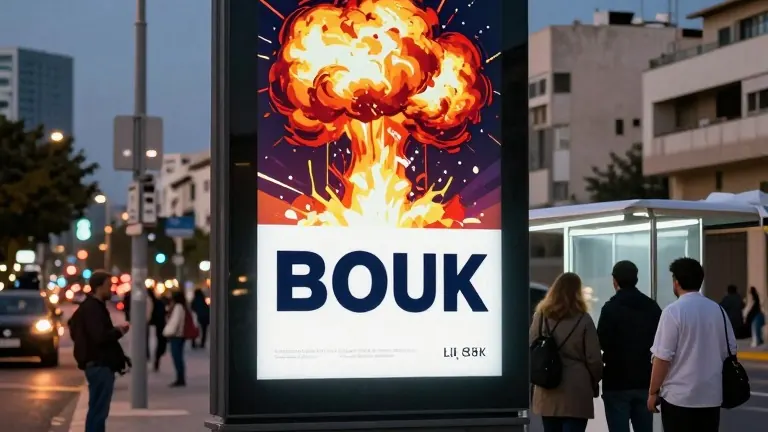
Israeli voters head to polling stations on Tuesday to select the government that will manage the country's security posture. The final days of the campaign have been defined by a debate over the threat posed by Iran and the credibility of those tasked with countering it. Prime Minister Benjamin Netanyahu argues that his tenure is essential to prevent what he describes as a second Holocaust, while opposition leaders contend that a change in leadership is necessary to restore institutional trust.
The stakes were elevated on Sunday when Netanyahu shared an artificial intelligence-generated image depicting a nuclear explosion over Tel Aviv. The visual was paired with a warning suggesting that his political defeat could leave the nation exposed to catastrophic attack. This message moved beyond standard policy disagreements to link the country's survival directly to the continued presence of one specific leader. Supporters view the imagery as a reminder of the urgent need for experienced leadership, whereas opponents argue it portrays the prime minister as indispensable.
A report from N12 News on Sunday night added a new dimension to the dispute. The outlet reported that IDF Chief of Staff Lt.-Gen. Eyal Zamir resisted an instruction for an undisclosed military operation. According to the account, defense officials feared the action could trigger a confrontation with Iran. Zamir reportedly sought further deliberations and requested written documentation regarding the legal authorization for the move. Netanyahu denied any tension or confrontation with the military's top brass over the issue.
The report has allowed rivals to question whether the military leadership fully trusts the prime minister's judgment on security matters. Critics of the government point to the account as evidence that professional military interests may be clashing with political calculations. Defenders of the administration, however, note that anonymous sources are common in security reporting and that a request for written authorization does not automatically render an operation unlawful. The timing of the report, days before the election, has intensified scrutiny of the motives behind its release.
The shadow of October 7 hangs over these arguments. The military and intelligence agencies suffered a catastrophic failure on that day, which has complicated the public's willingness to grant automatic deference to the security establishment. For many voters, the disaster undermines the claim that military judgment is inherently superior to political leadership. Conversely, Netanyahu bore ultimate political responsibility for security on October 7, meaning the disaster also challenges the credibility of his own office.
The election forces a choice between two competing narratives of trust. Netanyahu asks voters to rely on his experience and international standing to manage the Iranian threat. The change bloc argues that different leaders can handle the same dangers more responsibly. Both sides are making their case against the backdrop of a national trauma that exposed the limits of expertise and experience.
On Tuesday, citizens will choose a party and help determine the coalition that will govern. The decision involves more than just Iran, but the competing closing arguments have sharpened the question of whose warnings and motives voters are willing to credit. The outcome will set the direction for the government's approach to the region's most volatile threat.
Source: The Jerusalem Post