Hezbollah Spends Months Rebuilding After Israeli Strikes
Lebanese officials say the group received tens of millions of dollars from Iran to fix command structures and restock drones following a June truce.
By Haruka Ricci ·
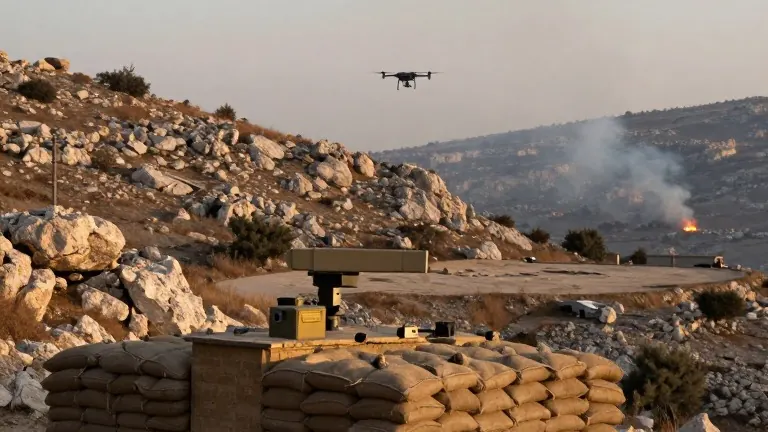
Lebanese security officials say Hezbollah has spent the last three months preparing for a possible return to war with Israel.
The group, which was founded by the Iranian Islamic Revolutionary Guard Corps in 1982, has taken heavy losses in two conflicts with Israel since 2024. Thousands of fighters and many senior leaders were killed, and a large portion of its weapons arsenal was destroyed.
Despite these setbacks, Hezbollah remains committed to attacking Israel. It has used the pause in fighting that began in June to rearm. The focus has been on buying explosives and building drones capable of flying into the security zone currently occupied by Israeli troops in southern Lebanon.
Two Lebanese security sources told Reuters that the group received tens of millions of dollars from Iran to boost its military capabilities. This new funding comes on top of roughly $200 million that Tehran previously sent to the group, a sum reported by Reuters earlier this month.
The group is working to restore command-and-control structures that collapsed during key battles. One source and three other security officials familiar with the operations confirmed this effort. Hezbollah’s media office rejected the idea that its command systems had broken down when asked by Reuters.
Israel’s military did not comment on the reports. Iran’s permanent mission to the United Nations in Geneva did not immediately respond to questions. A US State Department spokesman said Washington would continue to squeeze Hezbollah’s finances through sanctions. A US Treasury spokesperson added that Iran was running out of both money and ways to move it.
Tensions in the Middle East remain high following the US-Israeli war with Iran that started in February. Hezbollah joined the fight on March 2 in support of Iran. That move triggered an Israeli response that led to the evacuation of thousands of people, mostly from Hezbollah’s Shi'ite Muslim base, out of areas in southern Lebanon.
Hostilities eased over the summer as an interim deal between Iran and the US included a ceasefire in Lebanon. Washington also mediated talks between Lebanon and Israel. Although the US-Iran deal has since collapsed, full-scale war has not returned to Lebanon. Israel continues to strike Hezbollah targets in the south.
Hezbollah is on alert for a potential escalation between the US and Iran that could reignite the front in Lebanon. The sources said the group has not yet fully prepared its stockpiles or fighting force. It is still in the process of restocking.
This month, the group acknowledged that explosives seized by Lebanese authorities belonged to it. A Hezbollah official and a Lebanese security source told Reuters the weapons were intended for use against Israel, specifically for explosive drones. The group will also need to repair its ability to command units after losses at key locations, including the town of Bint Jbeil and the Ali al-Taher ridge.
Lebanese sources said Hezbollah’s tactic of using small units and saving anti-tank rockets left some fighters isolated on those fronts. They struggled against Israeli remotely operated systems, which included weaponized drones and armed remote-controlled vehicles. The Israeli military told Reuters it uses these systems to monitor southern Lebanon and reduce the risk to its troops.
Hezbollah has not stated explicitly whether it will join any new conflict. Its media office said it was wary of giving Israeli leaders a reason to increase efforts against the group.
Source: The Jerusalem Post