135 Russian Engineers Return to Bushehr as $25 Billion Sirik Plant Stands
Russia and Iran are expanding their nuclear cooperation as both countries face Western sanctions and international isolation.
By Lucas Chen ·
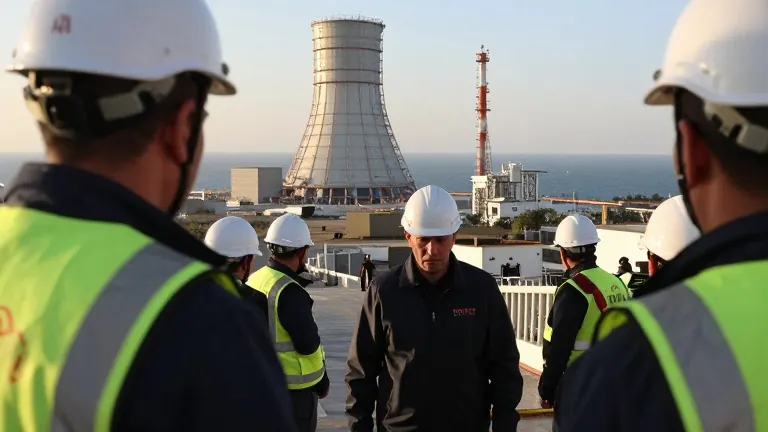
Russia and Iran are expanding their nuclear cooperation as both countries face Western sanctions and international isolation. Their partnership includes the construction of nuclear power plants, fuel supplies, and broader technological cooperation. This expansion brings new questions about the ability of international agencies to monitor Iran’s nuclear activities. While Bushehr, Iran’s first operating nuclear power station, has long been the centerpiece of their relationship, Moscow and Tehran are planning new nuclear facilities and cooperation in other areas of technology.
Rosatom has played a key role in completing and operating Bushehr, on Iran’s southern coast. A contract to complete the plant’s first reactor was signed in 1995, but the unit did not begin full commercial electricity generation until 2013. Rosatom has continued work at the site despite the military escalation in the Middle East. After the start of the US-Iran war in February, Rosatom evacuated most of its workers from Iran. But many of the personnel have since returned; by October 11, the Russian nuclear body reported that 135 engineering and technical specialists were back working at the site.
Construction is also continuing on two additional reactor units at Bushehr. Work on a second unit has progressed beyond 60 percent completion, with a target of starting operations in 2029, while construction of a third unit is also under way, according to Rosatom. The Bushehr plant has taken on broader strategic significance as Moscow and Tehran deepen their relationship. The legal foundation of this cooperation is the two countries' Comprehensive Strategic Partnership Treaty, which officially entered into force in October 2025.
The practical road map, however, is the intergovernmental Cooperation Plan For 2024-2026, which was approved in September 2024. For Russia, the nuclear partnership provides commercial opportunities and a way to maintain influence in the Middle East. For Iran, Russian assistance offers access to nuclear technology, expertise, and fuel supplies. The benefits are not necessarily equal, though. In a November 2025 article for the Carnegie Endowment for International Peace, analyst Nikita Smagin wrote that “the balance in the relationship is once again shifting in Russia’s favor.
Source: RFE/RL