Serbia’s New Leaders Prioritize Domestic Repair Over Foreign Policy Changes
Experts predict a gradual shift as the Student List government tackles institutional debt before adjusting ties with the EU, Russia, and regional neighbors.
By Evelyn Henderson ·
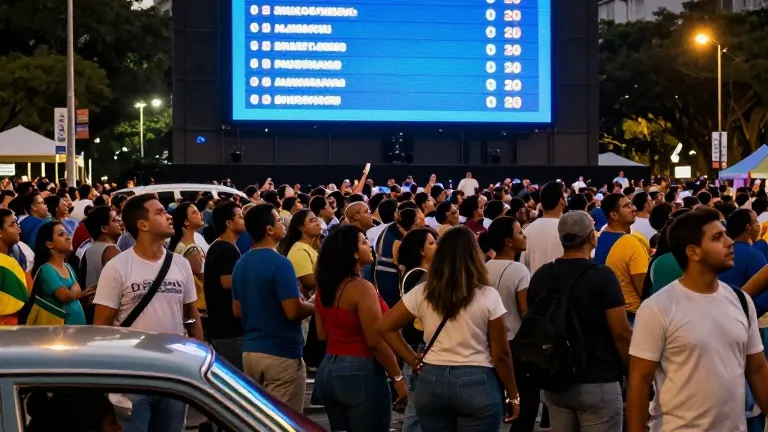
The political transition in Serbia has shifted the focus from external alliances to internal restructuring. Following the opposition Student List’s victory in Sunday’s election, experts predict the new government will address domestic institutions before altering the country’s foreign policy posture. This approach contrasts with international expectations of a rapid pivot toward the West after the end of Aleksandar Vucic’s 14-year rule.
Aleksandar Popov, director of the Centre for Regionalism in Novi Sad, stated that immediate changes in regional relations are unlikely. He noted that the new authorities must first repair a system that has captured democratic institutions, including the judiciary, police, and media. Popov argued that tidying up at home will take precedence over solving problems with neighbors, despite the previous regime’s efforts to undermine regional ties.
Relations with Croatia remain strained, marked by frequent sharp words. Popov described the dynamic as one where Zagreb fires poisoned arrows that Belgrade uses to justify retaliation. He noted that while public hostility persists, there is a quiet convergence on Bosnia and Herzegovina, with Belgrade supporting Milorad Dodik and Zagreb favoring a third entity. The new government aims to repair these damaged ties to revive Serbia’s European Union integration hopes.
Vuk Vuksanovic, a lecturer in foreign policy at King’s College London, predicted that foreign policy will transform the least under the new administration. He explained that many international and domestic structures shaping foreign policy will remain intact. Although Russian influence will face a blow due to reduced uncritical glorification in state media and downgraded intelligence cooperation, the new government is unlikely to adopt a hawkish stance overnight.
Serbia continues to rely on preferential gas prices from Russia and maintains an unresolved dispute over Kosovo. Vuksanovic stated that the new government will not see value in joining EU sanctions or adopting a hardline approach toward Moscow. The country will maintain its policy of not recognizing the annexation of Crimea and Donbas, though questions remain regarding ammunition deliveries to Ukraine, which the opposition viewed as a cynical ploy.
Bosko Jaksic, a foreign policy analyst, indicated that Serbia’s close relationship with Israel will face scrutiny rather than severance. The new government plans to re-examine recently concluded contracts, primarily those concerning Serbian ammunition exports to Israel and Israeli surveillance equipment exports to Serbia. Jaksic noted that Netanyahu’s government has lost another nationalist ally in Europe, but Serbia’s future stance will depend on political developments in Jerusalem.
The new leadership is expected to re-evaluate the policy of sitting on multiple chairs, which Jaksic said brought more harm than good. Belgrade is realistic in strengthening ties with the EU, but the international community should anticipate a period of intense internal reform rather than sudden geopolitical realignments.
Source: Al Jazeera