Water gap in Antarctica renamed after BBC science reporter
A new channel formed by melting ice now bears the name of Jonathan Amos, who covered polar science for four decades.
By Evelyn Henderson ·
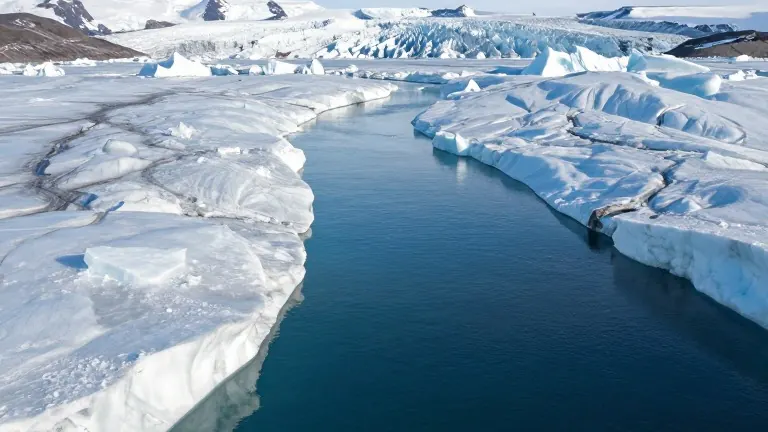
A stretch of open water between Rothschild Island and Alexander Island in Antarctica is now officially known as the Amos Channel. The new name honors Jonathan Amos, a former science correspondent for the BBC, who spent 38 years reporting on research at the South Pole.
The channel is a new geographical feature. It emerged when a block of ice that previously linked the two islands broke apart and melted away. The UK Antarctic Place Names Committee recommended the name, citing Amos' role in bringing scientific findings to a wide audience. The committee stated that his work brought Antarctic research to the forefront of public understanding.
Amos covered a range of polar topics during his tenure. His reporting included the movement of massive icebergs, the status of penguin populations, and the discovery of Ernest Shackleton's lost ship, the Endurance. He also focused on the melting of ice sheets, a key indicator of climate change. Although he wrote extensively about the region, he has not yet visited the continent in person.
The naming process follows strict guidelines. The UK Antarctic Place Names Committee manages the naming of sites within the British Antarctic Territory, South Georgia, and the South Sandwich Islands. Athena Dinar of the British Antarctic Survey described the honor as a fitting recognition of Amos' contribution to promoting research. She noted that his journalism offered accessible explanations for various audiences.
Amos began his career at the BBC in 1986 as a local radio reporter in Cambridge. He joined the team that launched the BBC News website in 1997 and later ran the online science desk. He moved into a broader science correspondent role covering television, radio, and digital platforms before leaving the organization in 2024.
Fiona Fox of the Science Media Centre commented on the decision. She said Amos consistently explained both the methods of Antarctic science and its relevance to society, climate understanding, and the global environment. The committee's decision reflects the specific impact his reporting had on public knowledge of the region.
Amos reacted to the naming with surprise. He described the honor as extraordinary and noted that having a piece of Antarctica named after him is a touching acknowledgment of his work. He said the news provides a strong incentive for him to visit the continent, which he views as the front line of the climate change story.
Source: BBC News