Ohio inmates raise 300 rabbits to secure 90% survival rate
A partnership between the Ohio Wildlife Center and state prisons allows incarcerated women to care for orphaned animals while earning professional certifications.
By Haruka Ricci ·
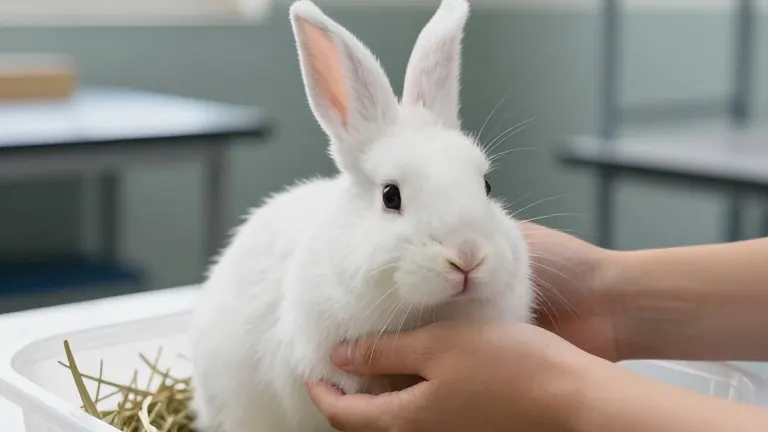
The rabbits in this program have a 90 percent survival rate. Emily Bush, an inmate at the Ohio Reformatory for Women in Marysville, works to maintain that statistic by hand-feeding orphaned kits with syringes. She and nine other women at the facility care for the bunnies, a task that requires them to work from 5:30 a.m. to 8:30 p.m. on some days.
Bush is nearing the end of a four-and-a-half-year sentence for child endangering and illegal drug manufacturing. She grew up on a farm in Meigs County, which gives her a background in animal care. At the reformatory, she also breeds mealworms in bins of sawdust. These worms serve as food for the reptiles and birds rescued by the Ohio Wildlife Center. The nonprofit accepts about 8,000 animals annually, most of which are orphaned babies requiring intensive nursing.
The partnership between the Ohio Wildlife Center and the Ohio Department of Rehabilitation and Correction began three decades ago. It expanded into its current structure in 2021. Approximately 200 incarcerated individuals across five prisons now participate in the program. Each facility specializes in a single species to simplify security approvals for supplies. Richland Correctional Institution handles opossums, while Marion Correctional Institution focuses on songbirds.
At the Marysville reformatory, the women raised more than 300 rabbits this year. The season started early in March due to flooding that displaced the animals from their burrows. All the bunnies left the prison by October. The women track the weight of each rabbit, starting with kits that weigh as little as 47 grams. They feed the animals formula until they reach 90 grams, after which the rabbits can eat kale. The animals typically stay for two and a half to three weeks.
David Donahue, a spokesman for the Ohio Wildlife Center, describes the arrangement as rehabilitation for both parties. He notes that some participants learn self-care through the process. Emily Stahl, the energy and conservation sustainability administrator for the Ohio Department of Rehabilitation and Correction, states that the program teaches empathy. She points out that many of the animals share similarities with the incarcerated population.
The department is rolling out a rehabilitator certification program through the Ohio Wildlife Rehabilitators Association within the next month. Bush will be eligible for this certification before her release in early 2027. Two-year animal rehabilitation apprenticeship programs with the Ohio Department of Labor will also become available to prisons. These credentials allow graduates to work at veterinary clinics, rehab centers, or zoos.
Bush plans to pursue a career in animal rehabilitation upon her release. She also intends to start a side business farming mealworms. She told her grandmother she would turn a barn into a mealworm factory, describing the venture as part of her future.
Source: WVXU