Tehran unveils anti-Trump billboard on anniversary of 1979 seizure
The display, which features the president behind bars, coincides with celebrations over US midterm results and ongoing tensions in the Strait of Hormuz.
By Evelyn Henderson ·
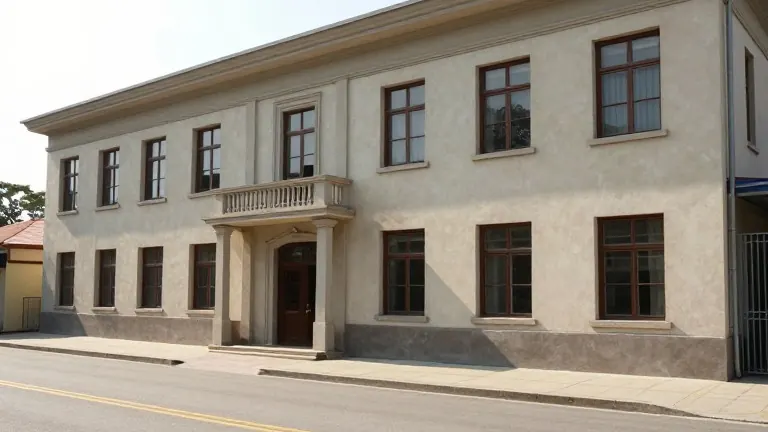
Tehran officials unveiled a massive billboard over Enqelab Square to mark the anniversary of the 1979 seizure of the US embassy. The visual display depicts Donald Trump behind prison bars and includes the English phrase "We will kill Trump." This public art installation highlights the personal animosity held by Iranian leadership toward the American president, a sentiment that has intensified following recent US midterm election results.
The timing of the announcement aligns with the political shift that ended the prospect of a second term for the current administration. Iranian leaders view this outcome as a validation of their strategy to control the Strait of Hormuz, a position they have held for eight months. This blockade has contributed to inflation and high diesel prices in the US economy. Trump acknowledged on Wednesday that these costs may be too high for the American public to sustain while preventing Iran from becoming a nuclear power.
Iranian political figures have celebrated the election results as a major victory. Ehsan Movaheidian, an international relations scholar, stated that Iran achieved regime change in America and predicted a similar outcome in Europe. In parliament, conservative member Meisam Zohurian said the aggressor was smeared in the dirt due to Iran's impact on the result. Ali Nikzad, the first deputy speaker, described the electoral defeats as aftershocks of Trump's defeat by the Iranian people.
Supreme Leader Mojtaba Khamenei offered a more cautious assessment. He warned that those expecting a shift in US policy due to partisan changes were seriously mistaken. He wrote that the behavior of the hegemonic system would not change through such shifts. Other officials predicted further electoral defeats for warmongers in Europe and the eventual expulsion of US bases from the Middle East.
Mohammad Bagher Ghalibaf, Iran's chief negotiator, urged Trump to accept the will of the American people. He noted on social media that America said no to war. He warned that if the US government betrayed this public will to serve international paymasters, it would learn that Iran's refusal comes with a nightmare. Despite the celebratory mood, Iran is expected to review its strategy as Gulf monarchies, Russia, and China seek solutions to the oil export blockade.
China is testing the feasibility of a deal where Iran dilutes its highly enriched uranium stockpile under international supervision. A Chinese special envoy is traveling to Oman, Iran, and Saudi Arabia to explore these options. These nations may point out that Trump remained determined to keep Iran in his vice despite darkening opinion polls. For the next two months, before the new Congress convenes in January, Trump has greater latitude to pursue a legacy by potentially finishing the conflict.
Influencers like Laura Loomer are pressing for a quick strike, arguing that there is nothing left to lose. Benjamin Netanyahu is touting intelligence about Iran preparing chemical weapons. Hillary Clinton believes Trump will launch the long-delayed attack because he will feel trapped. Trump told Fox News this week that Iran has very few missiles and drones left. He expressed confidence that the US is dealing with total strength and that the conflict could be ended at any time.
Source: The Guardian