Johnson's DSA warning and French chaos preview now face reality
The Speaker's final days of campaigning highlighted a potential Democratic takeover, but the results show a decisive shift in power.
By Evelyn Henderson ·
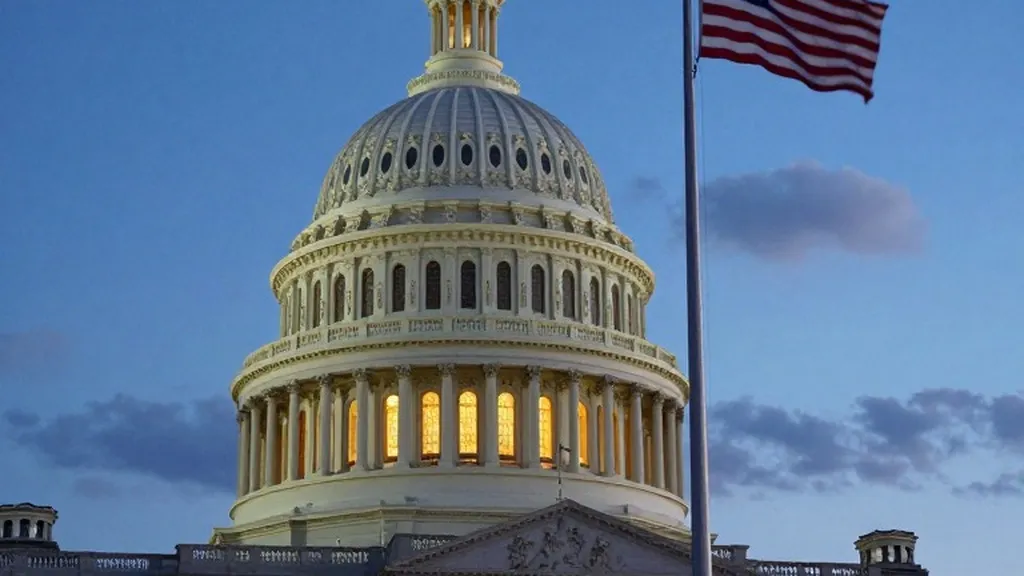
Speaker Mike Johnson spent the final days before the midterms warning that a Democratic House would be held hostage by the Democratic Socialists of America, a claim he made in a USA Today op-ed and repeated on Fox News. He described the scenario as a dark harbinger, pointing to recent unrest in France as a preview of what could happen in the United States. Johnson argued that even a narrow Democratic majority would allow the DSA to dictate policy, leading to chaos every day for two years. He specifically cited a comment from strategist James Carville, who admitted he would rather see Republicans keep the House than have Democrats win by five, because the party would be captive to the socialist wing. Johnson used these points to frame the election as a choice between common sense and absolute crazy, urging voters to look at the Republican record before casting their ballots.
In his op-ed, Johnson painted a stark picture of the current Democratic Party, stating that it had bent the knee to its far-left wing. He noted that the DSA platform calls for eradicating borders and prisons, granting mass amnesty, and abolishing the Senate. He argued that party leaders are welcoming these candidates into their big tent, ceding unprecedented power to a growing socialist cadre. Johnson used the recent violent riots in France as a concrete example, describing the smashing of buildings, looting of shops, and the torching of a historic town hall in Limoges. He characterized the French crisis as the inevitable result of decades of misguided policy, including lax immigration enforcement and suffocating regulation that drove debt to 119% of GDP. For Johnson, the chaos in France served as a warning of what could unfold in the United States if Democrats gained control of Congress.
During his Fox News interviews, Johnson emphasized the Republican record as a counterpoint to the Democratic agenda. He highlighted that House Republicans delivered a $4.6 trillion tax cut, described as the largest middle-class tax cut in history, and cut $1.6 trillion in wasteful government spending. He pointed to the securing of the border and the lowest violent crime rate in 126 years as key achievements. Johnson noted that these results were achieved with the slimmest House majority since the Great Depression, a fact he used to argue for the effectiveness of his leadership. He also mentioned the addition of more than one million private-sector jobs and the reshoring of American manufacturing as evidence that the Republican agenda was working for the American people. He contrasted this with the Democratic promise of defunding the police and opening the borders wide.
The Associated Press reported that voters took a wrecking ball to the traditional political map, electing Democrats in states long considered reliably Republican. The results showed a significant shift in power, with Democrats winning control of both the House and the Senate. According to Ballotpedia, Democrats had won 223 seats in the House as of the early morning counts, a clear majority. This result delivered a shockingly decisive rebuke of Republican governance in Washington. The Associated Press noted that this outcome ushers in a new era of congressional resistance to President Donald Trump. The shift was particularly notable in states like Texas, where no Democrat had won a statewide race since 1994, and in Kansas, where a Democratic senator was elected for the first time since 1932.
In Texas, the Democratic sweep was particularly deep. James Talarico defeated Ken Paxton for the Senate, and Gina Hinojosa ousted Governor Greg Abbott. The Associated Press reported that this was a wave election in Texas and across the country. Hinojosa's victory ended a three-decade hold by Republicans on the governor's office. The Associated Press noted that Democrats also swept to power in states that were once battlegrounds but were more recently viewed as out of reach. In Iowa, Rob Sand won the governor's race, and in Ohio, Amy Acton defeated Vivek Ramaswamy. These victories allowed Democrats to put up a stronger defense against Trump's second-term agenda, as they gained a majority of governorships for the first time in two decades.
The Associated Press reported that the electorate was frustrated and unhappy heading into the election, with the AP Voter Poll showing that three-quarters of voters felt the economy was not so good or poor. About 8 in 10 said inflation had caused a severe or moderate financial hardship for their households. This discontent with the cost of living was a major factor in the results, as voters sought change in Washington. The Associated Press noted that more than 59 million people had already cast ballots before Tuesday, surpassing early-voter turnout from 2022. The high turnout contributed to the decisive nature of the Democratic victory, as voters in red states turned out in large numbers to support Democratic candidates.
Speaker Johnson's warnings about the DSA and the French model now face the reality of a Democratic-controlled Congress. The House Republican record, which Johnson touted as historic, will now be scrutinized by a new majority. The Associated Press reported that Democrats have won control of the U.S. House in addition to the U.S. Senate, delivering a shockingly decisive rebuke of Republican governance. This dual control allows Democrats to oppose President Trump's agenda more effectively. The Associated Press noted that the results represent a durable tectonic shift that could reshape the path to the presidency, rather than a fluke stemming from Trump's unpopularity. The question now is whether this shift will be temporary or permanent.