Tesla confirms Cybercab deliveries begin before 2027
The company plans to start handing over the driverless two-seater to customers by the end of this year, though most units will remain in the corporate fleet.
By Evelyn Henderson ·
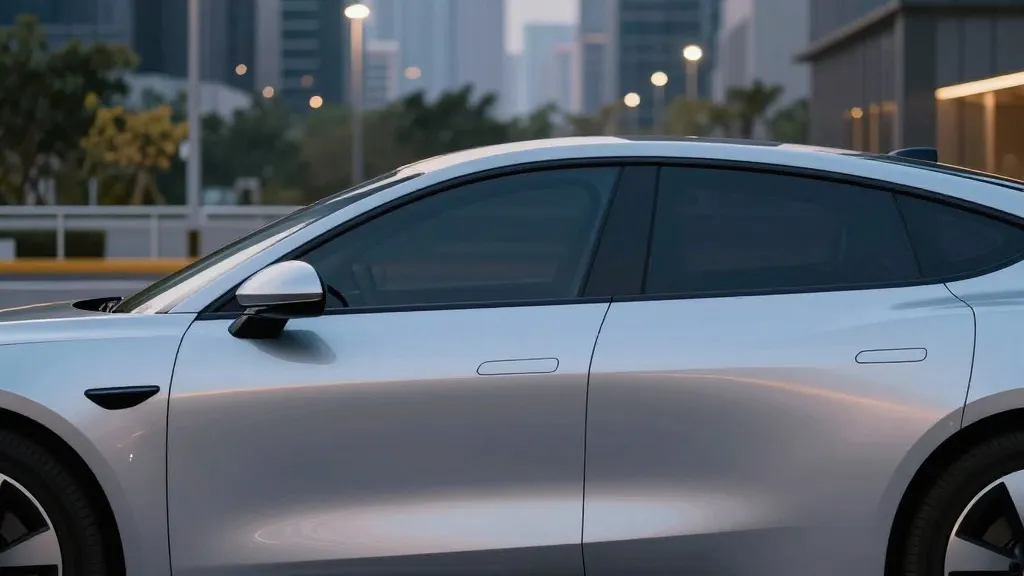
For drivers in the Great Lakes and Ohio Valley who have been watching the rise of driverless cars, a concrete milestone has finally arrived. Tesla has officially confirmed that its purpose-built autonomous vehicle, the Cybercab, will begin reaching private customers before the calendar year ends. This announcement ends a period of uncertainty regarding whether the car would ever leave the company's control or remain strictly a ride-hailing service. The shift signals a new phase where the technology moves from a corporate demo to a product that individuals can actually acquire.
The confirmation came during Tesla's earnings call on October 21. Lars Moravy, the company's Vice President of Engineering, stated that the goal is to get these vehicles into customer hands by the end of 2026. He noted that production is currently active on the line at Gigafactory Texas. However, he clarified that at this stage, every unit coming off that line is being sent directly to Tesla's internal Robotaxi fleet. This means that for now, the cars are working for the company rather than for individual owners. The move to private sales is a next step, not an immediate mass rollout.
To understand how we arrived at this moment, it helps to look at the recent production timeline. Tesla began manufacturing the Cybercab in February of this year. The vehicle is distinct from standard cars because it lacks a steering wheel and pedals. It relies entirely on Tesla's Full Self-Driving software. In early September, the company launched its public Robotaxi service, placing these early production units into daily operation. This period of real-world testing has allowed the company to gather data on how the cars perform outside of controlled environments. Now that the service is live, the focus is shifting toward broader availability.
Elon Musk, the company's CEO, reinforced the idea that private ownership will be a secondary aspect of the Cybercab's future. He described the vehicle primarily as a transport-as-a-service offering. According to Musk, the vast majority of Cybercabs will remain owned by Tesla. This model contrasts with the traditional automotive market, where cars like the Model 3 or Model Y are purchased and maintained by individual drivers. The Cybercab is designed to work as part of a managed fleet, similar to a shared taxi service, rather than as a personal asset in a driveway. This approach allows Tesla to manage updates and maintenance centrally.
Moravy explained that initial deliveries to customers will be small in scale. The company wants to gain experience in several key areas before expanding sales. These areas include delivery logistics, different ownership models, fleet management, and operating autonomous vehicles that are no longer under direct corporate control. By starting slowly, Tesla can refine these processes. As operations scale, the plan is to mainly deliver these fully designed autonomous vehicles to customers. The Cybercab will be the first such vehicle to follow this path, setting a precedent for how Tesla handles future autonomous products.
The company has previously indicated that the Cybercab would be priced around thirty thousand dollars. This price point is competitive with many standard new cars. However, the value proposition is different because of the autonomous capability. For now, the cars in the public Robotaxi service are operating in specific areas. As the service expands, more regions may become available. The technology is designed to work without a human driver, which changes the experience of travel significantly. The absence of controls means the interior is designed for passengers rather than operators.
Looking ahead, there are still some hurdles to clear. Ashok Elluswamy, Tesla's Head of AI, indicated that unsupervised Full Self-Driving is expected to ship to consumer cars during the second quarter of 2027. This timeline applies to the broader vehicle lineup. For the Cybercab, early buyers or fleet operators may find that the autonomous operation remains geographically restricted. This is often due to regulatory agencies that are still catching up to the technology. The laws governing self-driving cars vary by location, and not all areas are ready for unsupervised operation yet.
As we move toward the end of the year, the focus will be on how smoothly Tesla can transition these vehicles from its own fleet to customer ownership. The process involves more than just handing over the keys. It requires setting up the digital infrastructure to monitor and support the cars. For readers in the region, the question will be how quickly these vehicles appear in local services. The company's plan is clear: deliver by year-end, but keep most of the cars in the company's fleet. This hybrid approach allows for a gradual rollout that balances innovation with operational control.
Source: Teslarati · original report published