Warhound Secures $200M to Create Genetically Enhanced Military Canines
A new venture led by Colossal Biosciences and Anduril aims to solve the U.S. military's working dog shortage through gene editing and advanced hardware.
By Haruka Ricci ·
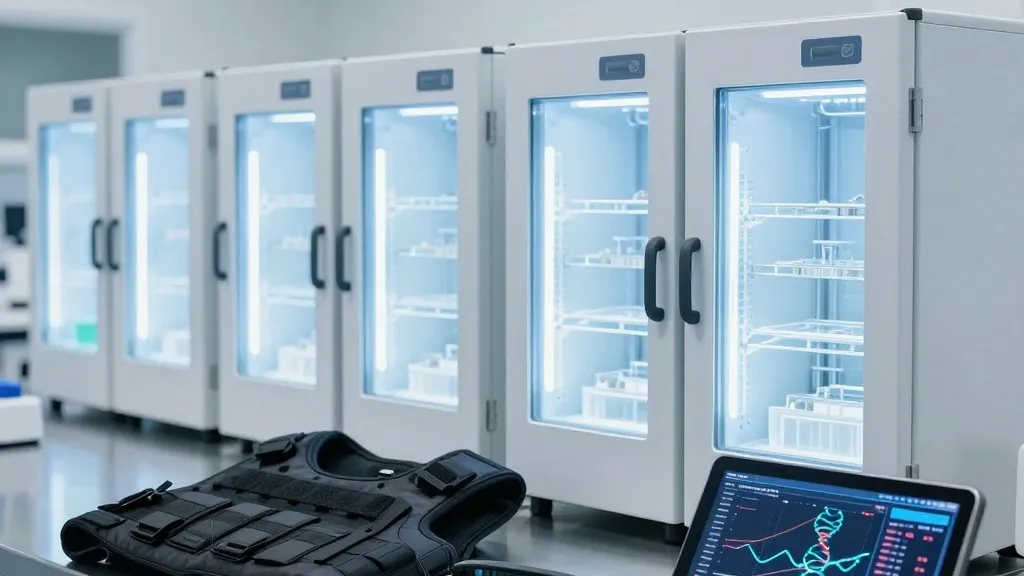
The U.S. military currently sources more than 80% of its working dogs from Europe, a dependency that highlights a critical vulnerability in national defense logistics. This statistic serves as the primary justification for Warhound, a new company that emerged from stealth mode on Thursday with a valuation of $1.2 billion. Backed by $200 million in fresh capital from Sequoia, 8VC, Corner Ventures, and In-Q-Tel, the venture represents a significant pivot in how the United States plans to address the dwindling supply of canines fit for combat and emergency response roles.
The core premise of the company is that the current pipeline for military working dogs is insufficient. According to the launch announcement, fewer than half of the dogs imported from Europe are deemed fit for service upon arrival. This shortfall creates an increasing reliance on foreign nations for animals that play pivotal roles in bomb detection, search operations, and other specialized tasks. Warhound intends to disrupt this supply chain by engineering canines domestically that possess specific traits suited to demanding missions, thereby reducing the strain on international breeding programs.
The project is a collaboration between Ben Lamm of Colossal Biosciences and Palmer Luckey of Anduril. Lamm noted that the idea originated from a conversation at a conference roughly a year ago, where Luckey expressed concern over the state of military working dogs. Lamm subsequently researched breeding practices and identified that many dogs fail to complete training due to inherited health issues. These predispositions include poor eyesight, high risks of cancer, hip dysplasia, and muscle atrophy, all of which limit a dog's operational lifespan and effectiveness.
To address these biological limitations, the team has established a biobank containing cell lines from top-performing breeds, specifically the Belgian Malinois and German Shepherd. The plan involves editing these genes to remove detrimental traits and add those that enhance performance. Lamm explained that the goal is to improve health, longevity, speed, agility, and olfactory sensitivity for tasks such as bomb sniffing. This process aims to create a new type of dog that is biologically optimized for the rigors of military service.
The partnership with Anduril is crucial for the operational side of the project. While Colossal handles the genetic engineering, Anduril will provide the software and hardware necessary to assist the dogs and their handlers. This includes protection vests and goggles equipped with data sensors. These devices will send real-time information back to handlers, improving situational awareness and coordination. Lamm described these technological additions as being layered on top of the dog rather than within it, ensuring that the animals are safer and healthier beyond just their genetic makeup.
The production timeline is ambitious. Lamm stated that the first batch of dogs is currently being cloned and incubated, with births expected in early 2027. Viagen, another company owned by Colossal, will handle the cloning process, leveraging its high success rates in cloning technology. The company hopes to have these dogs in service within two years. While specific pricing has not yet been announced, Warhound expects to sell to the Department of Defense, various military service groups, police forces, and other first responders.
Despite the rapid progress, several questions remain regarding oversight and welfare. Lamm noted that the company has briefed numerous government groups on the business, though specific approval processes were not detailed. Regarding civilian safety, he assured that each dog will undergo standard military working dog training and be managed by the purchasing agency. The company is also working under the guidance of the American Humane Society to certify its training program, aiming to ensure that the animals are treated ethically throughout their service.
The involvement of the American Humane Society adds a layer of public accountability to the venture. The organization stated that it looks forward to working with Warhound and Colossal to ensure the animals in their care are treated humanely. This collaboration is particularly important given the novelty of genetically enhanced animals in military contexts. The hope is that when these dogs retire, they can enter the Society's Military Working Dog Reunification Program or other support systems, providing a clear path for their post-service lives.
This venture marks a distinct expansion for Colossal Biosciences, which is currently known for its de-extinction efforts involving species like the mammoth and dodo. By applying its AI and gene cloning technologies to working dogs, the company is testing the commercial viability of its biotech platform in a high-demand sector. For the Great Lakes and Ohio Valley regions, which host numerous military installations and law enforcement agencies, the potential for a domestic, high-performance dog supply could significantly impact local procurement and training operations in the coming years.
Source: TechCrunch · original report published