Blue-Green Glow: The New Federal Signal for Driverless Cars
Federal regulators are proposing a standardized cyan light to help other drivers and police identify when a vehicle is operating without a human behind the wheel.
By Evelyn Henderson ·
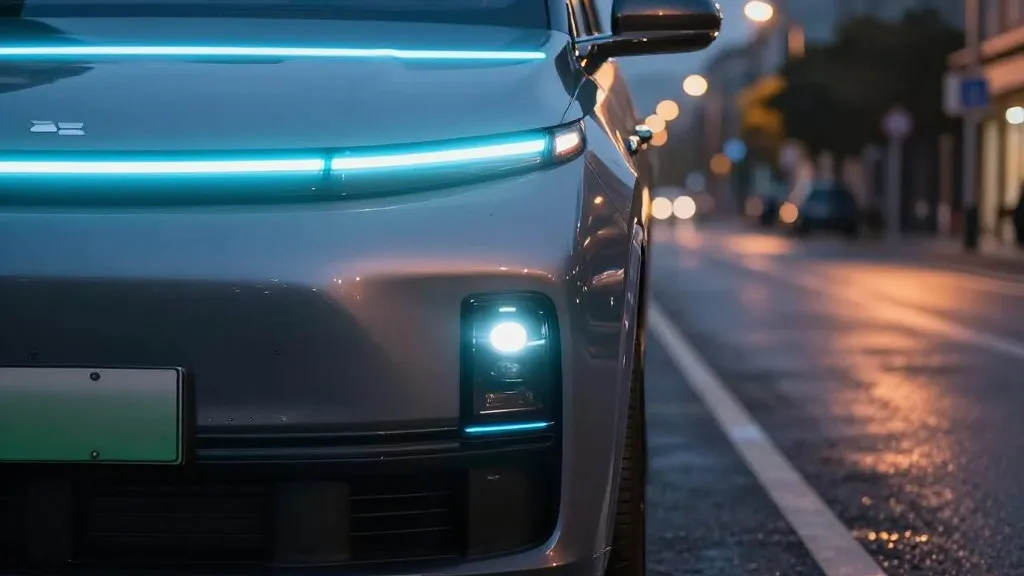
For years, the automotive industry has argued over how self-driving cars should announce their presence to the rest of the road. Now, federal regulators have settled on a single, distinct color: cyan.
The National Highway Traffic Safety Administration (NHTSA) has released proposed changes to Federal Motor Vehicle Safety Standard No. 108. The update specifically targets autonomous vehicles, aiming to streamline regulations while standardizing how these cars communicate with the world around them. The core of this proposal is a blue-green marker lamp designed to signal that an automated driving system is in control.
The choice of cyan is strategic. Current vehicle lighting already utilizes red for brakes, amber for turn signals, white for headlights, and flashing blue or red for emergency vehicles. By introducing a blue-green hue, NHTSA aims to fill a visual gap that does not conflict with existing signals. This ensures that law enforcement and other road users can immediately recognize when a car is driving itself, reducing confusion on the road.
While the lights would be optional for manufacturers, the federal standard would dictate specific requirements for color, brightness, and placement. This consistency is crucial for major robotaxi operators like Waymo, Nuro, and Zoox, as well as automakers such as GM and Mercedes-Benz. It prevents a fragmented landscape where different companies use different colors or configurations, establishing a uniform national standard. There is already some precedent for this approach, as Mercedes-Benz previously received state-level approval for turquoise lights on its Level 3 Drive Pilot vehicles, though the company has since pivoted to a different system.
Beyond adding new lights, the proposal removes several outdated requirements that do not apply to vehicles without human drivers. NHTSA seeks to eliminate mandates for physical hazard switches, manual beam shifters, and interior turn levers. The agency is also updating the 12.8-volt testing standard to accommodate modern LED architectures and is considering removing rules that dictate whether high-beam lights must be positioned above or below low-beam lights.
This regulatory shift is part of a broader Department of Transportation push to streamline the deployment of autonomous vehicles. The goal is to make it easier for automakers to design cars without traditional controls like steering wheels and pedals, which are unnecessary for fully self-driving operations. However, the transition is not entirely frictionless. Regulators are still enforcing current rules strictly, as evidenced by a recent audit query into the Tesla Cybercab. That review is examining the technical data Tesla used to certify the vehicle, particularly regarding the absence of sideview mirrors, pedals, and a steering wheel, which are currently required under existing safety standards.
Source: The Verge · original report published