Democrats prepare legal and observational strategies for 2026 midterms
A coalition of lawmakers and litigation groups is readying defenses against federal interference in state-led election processes.
By Haruka Ricci ·
The U.S. Constitution assigns the primary responsibility for administering elections to the states, but the current executive branch has expanded its direct involvement in the process.
Democratic members of Congress and their allies have formed a coordinated election protection task force to prepare for the November midterms. The group includes lawmakers, staffers, election litigators, scholars, and nonpartisan good governance organizations. They describe their effort as a defense against what they view as executive overreach into state-run voting systems.
The Trump administration has gathered millions of state voter records for law enforcement purposes and sought to restrict mail-in voting nationwide. It also declined the standard practice of inviting international election observers and proposed dispatching armed federal personnel to voting locations. White House spokeswoman Lauren Bis stated in October that the administration is taking decisive action to protect elections by prosecuting election crimes and strengthening infrastructure security.
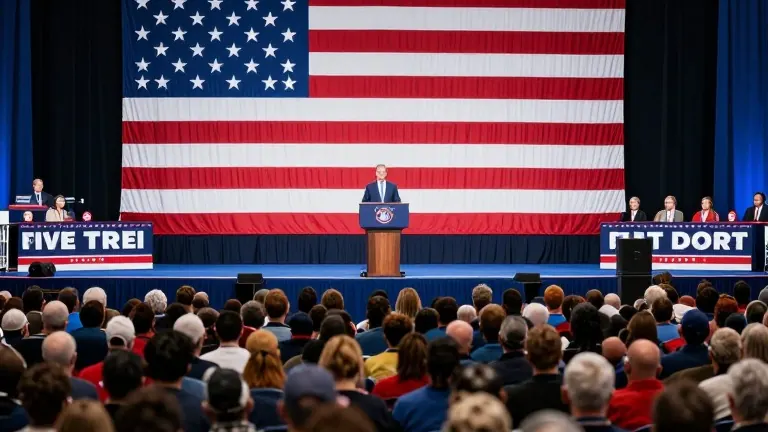
In July, President Trump addressed the nation from the White House East Room to call for the passage of the SAVE America Act. The bill would require voters to show proof of citizenship when registering and present a photo ID before casting a ballot. Justin Vail, a leader at Protect Democracy and a former special assistant to President Biden, characterized the speech as the first step in a three-step playbook: deceive, disrupt, and deny. Vail said the goal is to manufacture claims of fraud, disrupt local management, and deny results the administration does not like.
Marc Elias, an election litigator and task force member, said his firm has been involved in dozens of lawsuits spanning every state. He described the administration's actions as an ongoing effort to weaponize power against the entire election process, from registration to seating. A primary legal fight centered on mail-in ballots, where the administration ordered the Postal Service to deliver ballots only to registered voters. The Supreme Court ultimately halted that effort.
The Department of Homeland Security spent months collecting state voter rolls to identify noncitizens allegedly registered illegally. A tally by the State Democracy Research Initiative at the University of Wisconsin-Madison found 31 federal lawsuits seeking this data. States largely refused to comply, citing privacy laws and the Constitution.
On October 9, a federal district court ruled that the Justice Department's voter data collection program exceeds its authority and violates federal law. The court vacated the policy nationwide, affecting both states that resisted and those that voluntarily complied. The Justice Department has appealed the decision to the U.S. Court of Appeals for the D.C. Circuit.
Democratic lawmakers are using oversight tools to maintain a presence in the process. The House has had an active staff election observer program since the 1980s. This year marks the first Senate election observer program. More than 100 staff members have agreed to participate, per an announcement by Senate Democratic Majority Leader Schumer and Sen. Padilla. These staff will observe voting and tabulating locations without interfering with voters or election staff.
Sen. Lisa Blunt Rochester, D-Del., said the goal is to partner with state authorities as they carry out their duties. She emphasized the role of civil society organizations, attorneys, and community leaders in ensuring the election is safe and reliable. Sen. Mitch McConnell, R-Ky., who chairs the relevant committee, has not stated whether Republican staffers will participate in the observation program.
Task force members are preparing for worst-case scenarios with prewritten legal briefs and lists of high-risk areas. These lists include states where election officials have echoed presidential rhetoric, where results are expected to be close or slow, and where the administration has focused past scrutiny, such as California, Illinois, and New York. Election law experts consulted for this story agreed that the president has no constitutional role in election administration, which is delegated to the states and Congress.
Source: WVXU