Midterm Strategy: One Big Beautiful Bill Act faces affordability backlash
Republican candidates tout the 2025 tax law, but voters in key states cite rising costs and Medicaid cuts that may overshadow the tax breaks.
By Lucas Chen ·

The One Big Beautiful Bill Act, signed into law in July 2025, has become a central point of contention for candidates competing in the 2026 midterm elections. While the legislation delivered the largest tax cuts in American history, its impact on voters is split between party loyalty and daily financial realities.
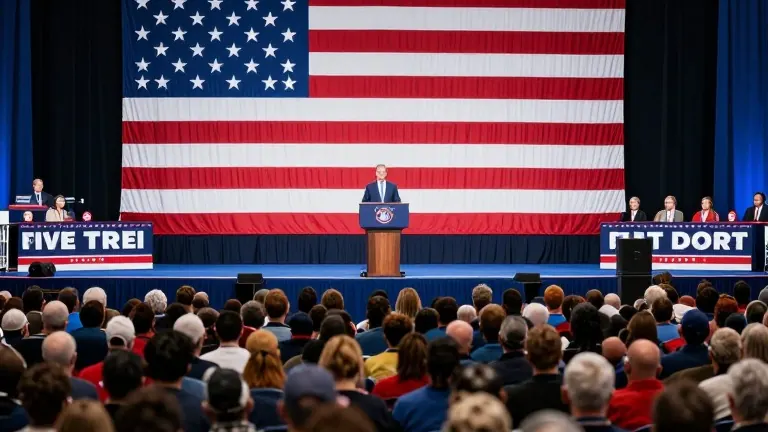
President Donald Trump defended the law at a rally in Corpus Christi on Tuesday, noting that his signature on the bill provided substantial relief to taxpayers. He emphasized that a Republican Congress secured these measures. Rep. Derrick Van Order, a Republican from Wisconsin, echoed these sentiments at the GOP convention in September, arguing that many Americans are unaware of specific benefits like the elimination of taxes on tips and overtime pay.
However, academic experts suggest the tax cuts are not shifting voter sentiment as Republicans hope. Dr. Todd Belt, a professor at George Washington University, stated that affordability remains the primary concern for voters. He noted that rising prices for gasoline, groceries, health care, and child care are causing many citizens to feel they cannot make ends meet, regardless of their tax liability.
Democratic challengers are leveraging these economic pressures to criticize the bill’s structure. In Texas, Senate candidate James Talarico proposed repealing the tax breaks for the top one percent of earners. In an interview in August, Talarico suggested redirecting that estimated $1 trillion to the middle class through a cost-of-living tax adjustment, arguing this approach would better benefit Texans.
The legislation’s changes to Medicaid have also drawn attention from voters who rely on the program. Amber Mader, a voter in Arkansas who is disabled and paralyzed, said the bill reduced the home health care nursing and transportation services she requires. She stated that she will not see a single cent in benefit from the tax cuts while dealing with daily disruptions to basic services.
Elena Patel, co-director of the Urban Brookings Tax Policy Center, agreed that tax policy is difficult to use for direct affordability relief. Patel explained that while early changes benefited middle and lower-income families, the long-term effects of the bill will increasingly favor high-income taxpayers.
Source: WXIX-TV