
Ohio voters will face multiple types of election monitors on Tuesday
The Department of Justice is sending staff to watch polling places from the outside, while local volunteers and party representatives observe different aspects of the process.
By Haruka Ricci ·
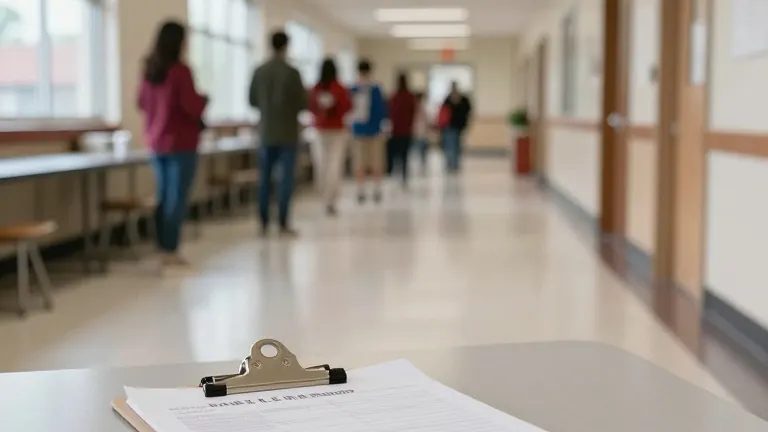
The U.S. Department of Justice plans to send civilian staff to observe polling locations in Franklin County and two other northeast Ohio counties on Tuesday. These federal watchers are part of a nationwide effort that will place approximately 1,000 monitors in all 50 states on Election Day. Their presence adds a new layer of scrutiny to a process that already includes local volunteers, political party appointees, and media personnel.
In Ohio, the term election monitor covers several distinct roles with varying levels of authority. Antone White, director of the Franklin County Board of Elections, stated that voters should expect observation because the system is transparent. However, the specific rights of these observers depend on their affiliation and the legal framework governing their appointment.
Political party observers hold the most direct access inside polling places. Under state law, any party with candidates on the ballot or a ballot issue committee can appoint one observer per location for early and election day voting. These individuals must be registered Ohio voters and must notify the county board before arriving. They are permitted to watch officials perform duties, including the counting of ballots, and are a common sight at most elections.
The federal observers arriving this week have a more limited scope. White explained that they are monitoring compliance with federal voting rights standards. Unlike party observers, DOJ staff are not permitted to enter the voting area. They will remain outside the polling location, behind the 100-foot campaign barrier, where they can watch the flow of voters and the exterior operations. White noted that these watchers will likely be in plain clothes but will carry credentials.
This federal presence is distinct from congressional observers, who have the legal authority to watch all stages of the election since 2024. White said he does not expect congressional monitors to visit Franklin County this year. The DOJ’s current deployment of civilian staff is a separate action that has historical precedent, such as the nearly 400 monitors sent nationwide by the Biden administration in 2022. DOJ watchers have previously visited Franklin County, though that last occurred more than a decade ago.
Local volunteers from organizations like Election Protection, such as Pamela Conrad, also play a visible role. Conrad, who works with the League of Women Voters of Metropolitan Columbus, uses a clipboard and purple shirt to identify herself as a nonpartisan volunteer. She and her team stay outside the 100-foot barrier, similar to the federal staff. Their tasks include checking if polling places open on time, verifying accessibility, and noting if lines become excessively long.
Conrad said her team also keeps an eye on campaign activity to ensure it remains far enough from the building. If they spot an issue, they take detailed notes and report back to their organization. She frequently answers voter questions about identification requirements and provisional ballots. Conrad emphasized that her group is scrupulously nonpartisan and does not speak for any political entity.
White expects more observers than in previous years due to the highly contested races for governor and U.S. Senate in Ohio. He stated that this increased attention will not change how poll workers operate. He urged voters to feel confident that they can cast their ballots without concern for the number of people watching the process.
Media personnel also hold credentials that allow them access to both the interior and exterior of polling places. This group adds another category of observer that voters may encounter. The combination of party appointees, federal staff, local volunteers, and journalists means that Tuesday’s polls in Franklin County will be watched by a diverse group of individuals.
Source: WVXU