Spain Rail Disaster: Sánchez Orders National Mourning After 68 Killed
A signaling fault in Madrid led to a collision on the Madrid-Seville line, marking the second major train crash in Spain this year.
By Lucas Chen ·
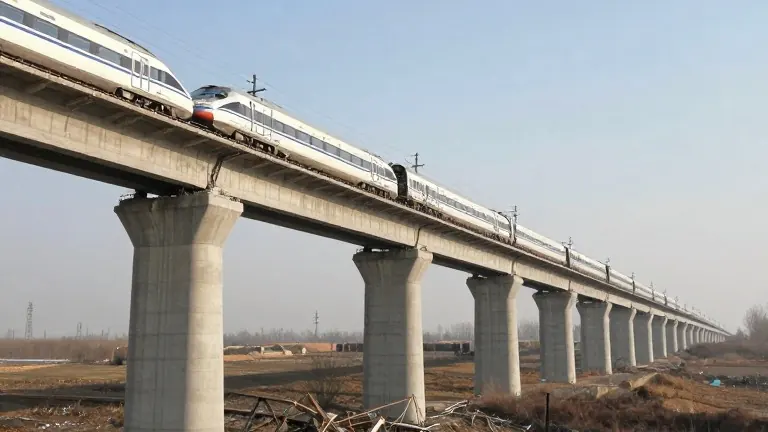
Spanish Prime Minister Pedro Sánchez declared three days of national mourning on Wednesday after at least 68 people died in a high-speed train collision in central Spain. The incident occurred on the line connecting Madrid to Seville when one train struck the rear of another that had stopped. Dozens of additional passengers were injured, with rescue teams continuing to search through the wreckage.
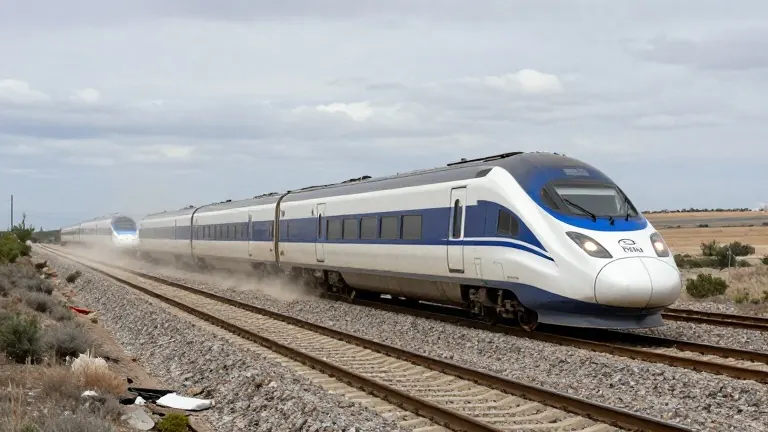
The crash happened because the LZB signaling system, which automatically halts trains if the track ahead is occupied, failed due to a computer malfunction at approximately 8:30 a.m. local time. This failure forced the Madrid command center to manually manage traffic. Officials stated that the center instructed at least two trains to resume movement despite a stop signal remaining active on the line. The Renfe train, traveling behind, was told to proceed. It covered roughly 25 kilometers before colliding with the stationary Iryo train about 17 minutes later.
Transport Minister Óscar Puente described the decision by the control center operators to restart traffic as a mistake made under inexplicable circumstances. He noted that a similar error was issued to another train that morning, but that train’s engineer overruled the command center. The engineer requested an on-sight operation, which allows trains to move at reduced speeds to ensure the tracks are clear. Puente emphasized that no specific party had been assigned responsibility yet, but the facts indicated the control center made the wrong choice.
Regional leader Emiliano García-Page reported that the death toll could rise because rescuers had not yet accessed the bottom of the carriages. Seventy-three people required hospital treatment, including 15 in serious condition. A passenger named Miguel, who was in the rear car of one of the trains, told Cope radio that he heard a massive roar and a thud lasting 10 seconds. He saw the wrecked other train through the right-hand window immediately after the impact.
This event marks the second major high-speed rail accident in Spain in 2026. The January crash in Adamuz also involved Renfe and Iryo trains and killed 46 people. Sánchez stated that the causes of the two accidents appear unrelated, though an official investigation is underway. He promised that any failures in security systems or negligence would be addressed with utmost severity. The Spanish football federation postponed all 24 Copa Del Rey matches scheduled for Wednesday, and major political parties suspended their campaign activities for the day ahead of next month's general election.
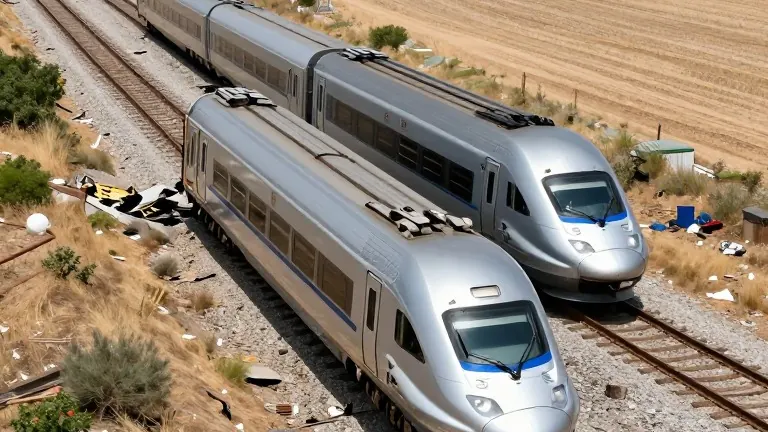
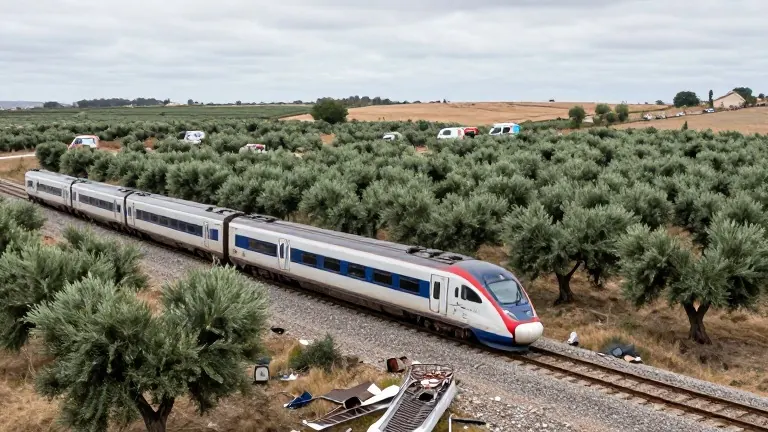
Mayors in the affected area, including Manuel Galán of Urda near Toledo, prepared local facilities such as sports halls to accommodate injured victims. Footage from the scene showed twisted metal and broken panels strewn across an embankment beneath the elevated tracks. One carriage remained on the elevated section while others derailed. The Renfe train’s speed at the moment of impact is unknown, although the track section permits speeds up to 200 km/h.
Source: The Irish Times