Israelis Cast Ballots in Contested Election as Netanyahu Faces Security Rival
More than seven million eligible voters head to the polls Tuesday to decide the future of Prime Minister Benjamin Netanyahu’s government amid ongoing regional conflicts and domestic divisions.
By Evelyn Henderson ·
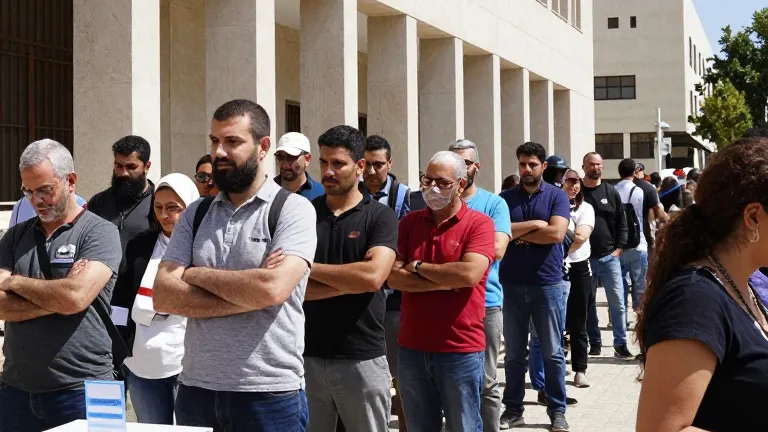
Israelis are voting Tuesday in a national election that determines whether Prime Minister Benjamin Netanyahu retains power after three years of war. The vote follows the October 7, 2023, Hamas attack and marks the first general election since that event. Over 7 million people are eligible to cast ballots in a race characterized by deep political fragmentation.
Netanyahu faces a challenge from former military chief Gadi Eisenkot. Opinion polls indicate a tight contest between the two figures. No single party in Israel has ever secured an outright parliamentary majority, requiring leaders to build coalitions. This structure means that neither the religious and ultranationalist bloc supporting Netanyahu nor the opposition group backing Eisenkot may possess sufficient seats to govern immediately.
If no clear majority emerges, the country could enter weeks of coalition negotiations before a new leader is declared. Arab-led parties, which have campaigned for high voter turnout, may hold decisive power in those talks. Other parties must agree to join forces with them for a coalition to form.
Tensions with Iran hang over the campaign. Netanyahu increased threats against Tehran ahead of the vote. In a video released this week, he stood beside a missile-defense battery and warned Iran it would face a devastating blow if it attacked Israel. The prime minister’s supporters view him as a steady hand who has guided the country through multiple wars. They believe he protects Israel’s Jewish identity and checks what they describe as an interventionist judiciary.
Critics argue that Netanyahu is a polarizing leader who prolonged the Gaza war for political reasons. They point to his ongoing corruption trial and accusations that he is weakening the independent judiciary. Detractors also accuse him of supporting a system that allows ultra-Orthodox religious Jews to avoid compulsory military service. Around 330,000 young Israelis facing conscription are eligible to vote for the first time in this election.
Eisenkot is seen by his backers as a capable leader with strong security credentials. His son and two nephews were killed in Gaza, a personal loss his supporters say connects him to the national pain. Parties likely to support Eisenkot have pledged to improve Israel’s international standing. They also vowed to conscript ultra-Orthodox men and bolster the independence of the judiciary.
Emotions were visible at polling stations as votes were cast. In Kiryat Shmona, a Netanyahu stronghold near the Lebanese border, a man kicked and tore down a poster of Eisenkot. In Tel Aviv, families of those killed on October 7 or former hostages observed a moment of silence before polls opened. Yona Adam, whose daughter Mapal Adam was killed, said, “Remember all those whose voices are no more.”
The election serves as a referendum on the type of society Israel should be. Voters are choosing between a state heavily influenced by religious and nationalist forces or one more firmly anchored in liberal and secular values. Tens of thousands of voters living overseas reportedly flew to Israel to participate. The outcome will shape a country whose policies face sharp criticism from traditional allies, with public support in the United States declining and sanctions imposed by partners in Europe in recent months.
Source: ClickOnDetroit WDIV