Merz leads 30-business delegation to Asia to secure supply chains
The German chancellor’s five-day trip to Singapore, Japan, and South Korea focuses on economic resilience and security cooperation amid rising geopolitical risks.
By Haruka Ricci ·
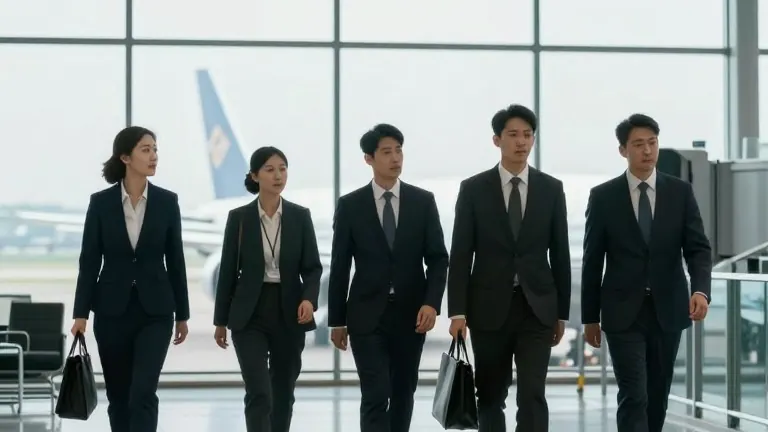
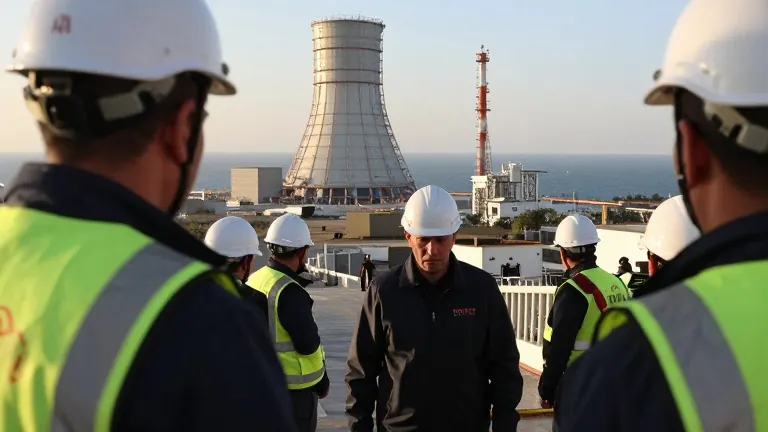
German Chancellor Friedrich Merz began a five-day tour of Asia on Monday, bringing with him a delegation of 30 senior business leaders from the industry, technology, defense, and energy sectors. The trip includes stops in Singapore, Japan, and South Korea, aiming to strengthen economic and security ties as global supply chains face growing instability.
The primary goal of the visit is to secure Germany’s access to critical resources and stabilize trade routes. In Japan, Merz will meet Prime Minister Sanae Takaichi and participate in the German-Japanese Business Summit. The two leaders are expected to discuss protecting strategically important industries and ensuring access to rare earth elements, which are vital for advanced technologies and currently dominated by China.
Security concerns drive the agenda in Tokyo. Ben Ascione, an assistant professor at Waseda University, noted that Japan has sought new security allies for over a decade. He stated that Takaichi is following the blueprint started by former Prime Minister Shinzo Abe due to tensions in the Indo-Pacific and uncertainty surrounding the second administration of US President Donald Trump. Japan and Germany face different immediate threats, with Berlin focused on Russia and Tokyo watching China and North Korea, but their perceptions of the Chinese security risk are aligning.
Military cooperation is also on the table. Ascione said Japan would welcome the deployment of German military assets to the region. This follows previous engagements, such as the Bayern frigate docking in Tokyo in May 2021 and Eurofighter Typhoon aircraft conducting drills with Japanese fighters in July 2024. These steps reflect a broader shift toward supply chain resilience and deeper security partnerships in Asia.
In South Korea, Merz will meet President Lee Jae-myung and open the 19th Asia-Pacific Conference of German Business. He is also scheduled to visit the Demilitarized Zone, a trip that could be canceled due to lingering tensions after a North Korean mine injured three South Korean soldiers last month. The visit offers a chance to discuss the complex dynamics of inter-Korean relations.
Saeme Kim, a research fellow at The Asan Institute for Policy Studies, expects security issues to dominate the Seoul discussions. She indicated that European nations, including Germany, are irritated by the Lee administration’s outreach to North Korea and Russia. This is particularly true given recent reports of petroleum exports to Russia and Seoul’s efforts to establish communication channels with Pyongyang, despite Kim Jong Un sending troops to Ukraine.
Merz may offer insights from Germany’s 1990 reunification, though Kim noted that the two Koreas remain technically at war and Seoul borders an aspiring nuclear power. While the German and Chinese delegations are not officially linked, President Frank-Walter Steinmeier is simultaneously visiting China. Both trips aim to bolster Berlin’s economic and security relationships in a volatile geopolitical environment.
Source: Deutsche Welle