Lula's Victory: Brazil's 80-Year-Old Leader Defies Regional Trend
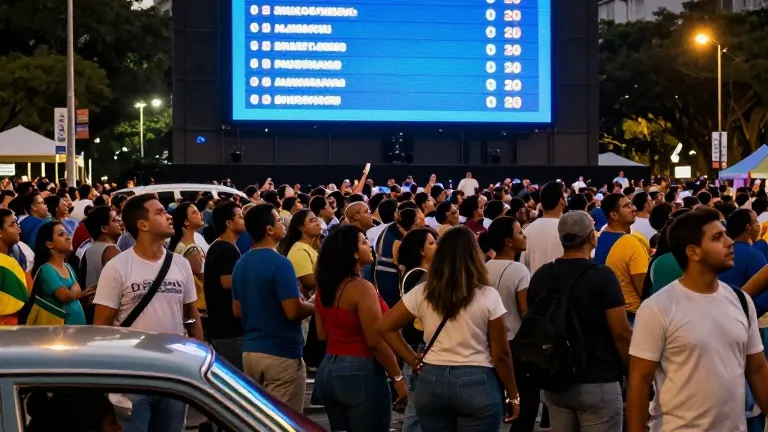
Luiz Inácio Lula da Silva secured re-election in Sunday's runoff, beating Flávio Bolsonaro and cementing a political comeback that counters the rise of right-wing allies in Latin America.
By Evelyn Henderson ·
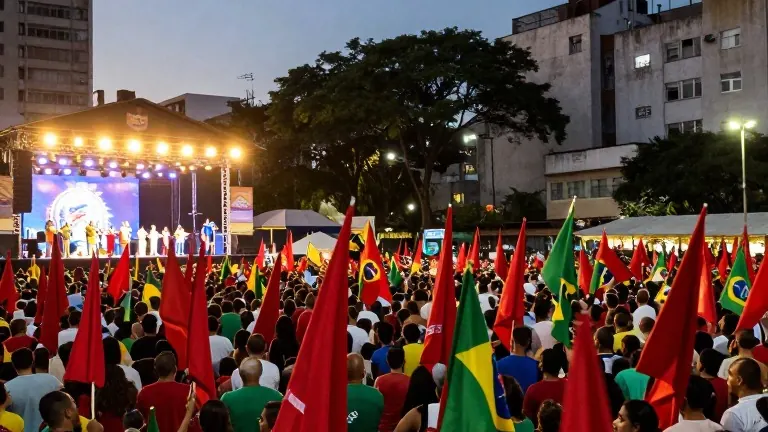
Luiz Inácio Lula da Silva won re-election as president of Brazil in Sunday's runoff, defeating Flávio Bolsonaro in a contest that reversed his first-round deficit within three weeks. At 80 years old, Lula turns 81 on Tuesday. His victory runs counter to a recent pattern in Latin America where right-wing leaders with policies similar to those of US President Donald Trump have gained power.
The result marks a notable shift in the regional political balance. Lula first took office in 2003 after winning the presidency in 2002 on his fourth attempt. He became Brazil's first leftist leader in nearly half a century. His background included working as a peanut seller and shoe-shine boy, and he learned to read at age 10. A metalworker by trade, he lost the little finger of his left hand in a factory accident in the 1960s.
Lula's path to the presidency began in the trade union movement. He was elected head of the Metalworkers' Union in 1975, a body with 100,000 members. He helped transform government-friendly unions into an independent force. In 1980, he co-founded the Workers' Party, the first major socialist party in Brazil. The party later adopted a pragmatic, social democratic platform.
During his first two terms, which ended in December 2010, Lula invested billions of dollars in social programs. He raised the minimum wage above inflation and expanded the Bolsa Familia grant scheme. That program assisted approximately 44 million people. While critics argued the scheme did not address structural issues like poor education, Lula left office with an 83% approval rating following a period of economic growth that lasted longer than in the previous three decades.
His political fortunes changed after his successor stalled progress and a recession hit the country. The Operation Car Wash corruption investigation led to his conviction in 2017 for accepting a beachside flat from the firm OAS. A separate conviction for corruption and money laundering regarding a country house added to his sentence, which reached 12 years and 11 months on appeal. Lula maintained the charges were politically motivated. He was released in 2019 after a Supreme Court ruling, and his convictions were annulled in 2021.
Lula returned to office in 2023 after defeating Jair Bolsonaro in 2022. He had stated upon his return that it would be his final term, yet his party supported his candidacy again this year. Environmentalists have criticized his support for offshore oil drilling near the Amazon mouth. Lula argues that oil revenue will fund the transition to clean energy, while his government cites satellite data showing deforestation in the first half of 2026 was the lowest in a decade.
Relations with the United States have remained complex. President Trump imposed 50% tariffs on Brazilian goods, citing the trial of Jair Bolsonaro, who is serving a 27-year sentence. Lula described this as foreign interference, stating that "he's not emperor of the world." After a White House meeting in May, relations improved slightly. Trump called Lula "dynamic," and Lula said he was "very satisfied." The US later imposed 25% tariffs on most Brazilian goods in July.
On the global stage, Lula has criticized the veto power held by the five permanent members of the UN Security Council. He argues this structure excludes major economies like Brazil, Germany, India, and Japan, as well as African nations. Brazil serves as an active member of the Brics group, which includes Russia, India, China, and South Africa. Lula views the alliance as a counterweight to Western influence and defends his decision to continue purchasing Russian oil during the war in Ukraine.
Source: BBC News