National Symphony Orchestra cuts season in half after losing Kennedy Center home
Ticket revenue is expected to fall by 50 percent as the group performs in temporary venues across the Washington region.
By Haruka Ricci ·
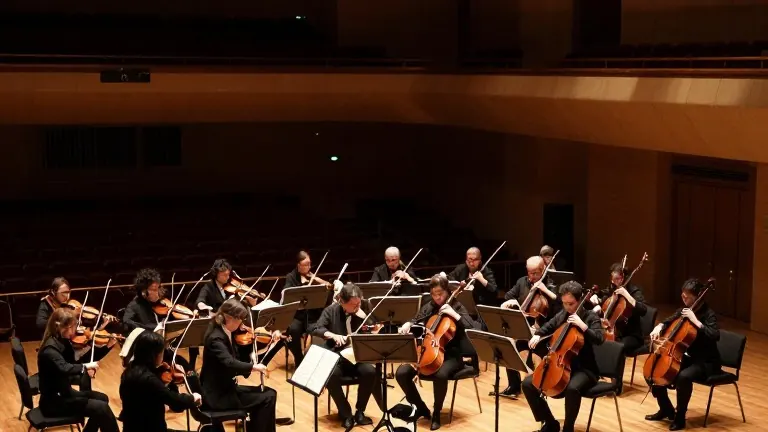
The National Symphony Orchestra will perform roughly half of its usual number of concerts this season after the John F. Kennedy Center for the Performing Arts closed its doors on Sept. 15. The 95 year old ensemble, which has played at the Washington, D.C. complex since 1971, is now forced to tour six alternative venues in the greater metropolitan area. This drastic reduction follows months of declining ticket sales and legal disputes over the addition of President Donald Trump's name to the building's facade.
Music director Gianandrea Noseda, who has led the orchestra for nine years, described the closure as a cold shower. He stated that the news was absolutely unexpected and that his immediate reaction was to wonder what the group would do without its primary home. The leadership team scrambled to secure six new performance spaces in the region while hoping to preserve at least part of their budget. The new season was announced in mid August, only six weeks before the opening concert, because the orchestra had to wait for budget approval from the Kennedy Center board of trustees.
The first concert of the season took place on Sept. 26 at the Music Center at Strathmore in Bethesda, Md. The program featured new works by Carlos Simon alongside classic pieces by Tchaikovsky and Respighi. Anne Midgette, a former classical music critic for The Washington Post, called the evening bittersweet. She noted that while it was great to see the orchestra together, it was striking that a major city orchestra had to perform outside of its home hall. She also warned that the situation was a recipe ripe for disaster due to the reduced financial base.
Financial projections indicate a severe downturn for the group. The Washington Post reported in August that ticket revenue is expected to drop by about half, while donations are down by a quarter. These figures reflect massive cuts to the Kennedy Center's development department. The orchestra also lost most of its former staff, including executive director Jean Davidson, who resigned in March citing the turmoil at the center as the primary reason for her departure. The loss of administrative support adds to the operational challenges the musicians now face.
Associate principal double bassist Rick Barber, a member of the NSO since 1995, said the musicians were stunned by the closure and experienced months of anxiety. However, he believes the orchestra will not fold. Barber stated that while he sees political divisions in the nation, he does not think about them when playing music. Noseda has extended his contract with the orchestra until 2031, deciding against leaving after the firing of former president Deborah Rutter. He said leaving would have been too easy and viewed the situation as an opportunity to reach new audiences in different locations.
The season serves as a test for audience engagement across the country, where many symphonies are struggling financially. Some, such as the Phoenix Symphony, have recently shut down. Midgette noted that the simple cost of buying a ticket and traveling to a concert has become more challenging for many Americans. She described the current season in various halls as a real acid test for how invested the public is in the orchestra. The NSO will continue to perform in temporary venues until the future of the Kennedy Center is resolved.
Source: WOSU-FM