Israel votes Tuesday with no clear winner in sight
Polls project a stalemate in the 120-seat Knesset race, forcing complex coalition talks or a fourth election in five years.
By Lucas Chen ·
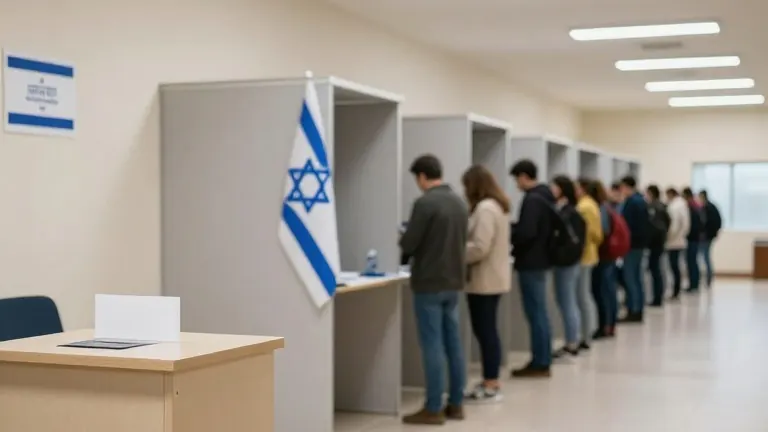
Israelis head to the polls Tuesday to fill all 120 seats in the Knesset, with recent polling indicating neither the pro-Netanyahu bloc nor the opposition change bloc will secure a 61-seat majority. This lack of a decisive winner sets the stage for weeks of intense coalition negotiations or the possibility of a fourth election in five years.
The race is tight across the ideological spectrum. Right-leaning pollsters favor the coalition led by Prime Minister Benjamin Netanyahu, which includes Likud, ultranationalist, and religious parties. Left-leaning pollsters show a lead for the change bloc, a diverse group of centrist, left-wing, and Arab parties united primarily by their opposition to the incumbent. Most models show the margin of victory hovering near zero, meaning the final government structure will depend on backroom deals rather than raw vote counts.
Yohanan Plesner, president of the Israel Democracy Institute, told CBS News that an indecisive outcome is the most probable result. He noted that voter turnout remains the largest variable. Arab-Israeli voters, who constitute about 20% of the population, have historically shown high volatility in their participation rates. Plesner stated that higher Arab turnout reduces the likelihood of Netanyahu forming another government with his current far-right allies.
Netanyahu is campaigning on the premise that his coalition is the only one that can exclude Arab parties from power and finish the war in Gaza, Lebanon, and Iran. He argues that his relationship with U.S. President Donald Trump is essential for preventing Iran from acquiring nuclear weapons. Trump endorsed Netanyahu last week, warning that the U.S. would be disinclined to continue military operations against Iran if Netanyahu lost power. Netanyahu’s campaign slogan warns that the choice is between a right-wing government or a nuclear threat.
Leading the change bloc is Gadi Eisenkot, a former military chief who heads the centrist Yashar party. Eisenkot lost his son and two nephews in service during the Gaza war. He positions himself as a unifying figure and has promised to launch a state inquiry into the intelligence failures behind the Oct. 7, 2023, Hamas attacks, a step Netanyahu has blocked. Eisenkot criticized Netanyahu’s use of nuclear imagery in campaign ads, calling it a campaign of fear-mongering.
Two new parties are also entering the race, both focused on drafting ultra-Orthodox men for military service. Polls place these parties near the 3.25% threshold required to enter the Knesset. Their potential entry could tip the balance of power in either direction by challenging Netanyahu’s alliance with religious parties who oppose mandatory service for their community members.
If no bloc reaches 61 seats, Israeli law allows for the formation of a minority government. This requires a coalition to win more seats than the opposing side, even if it does not hold more than half of the total seats. Arab parties could facilitate this by abstaining from votes against such a government. Alternatively, individual lawmakers could switch sides to form a majority, a common practice in Israeli politics. If these paths fail, the country will return to the polls, a scenario that occurred three times between 2019 and 2022.
Source: CBS News