MLB Owners Seek $245 Million Salary Cap As CBA Expiration Looms
Baseball's next collective-bargaining agreement expires December 1, with owners pushing for a hard cap while players demand a 100 percent minimum salary increase.
By Evelyn Henderson ·
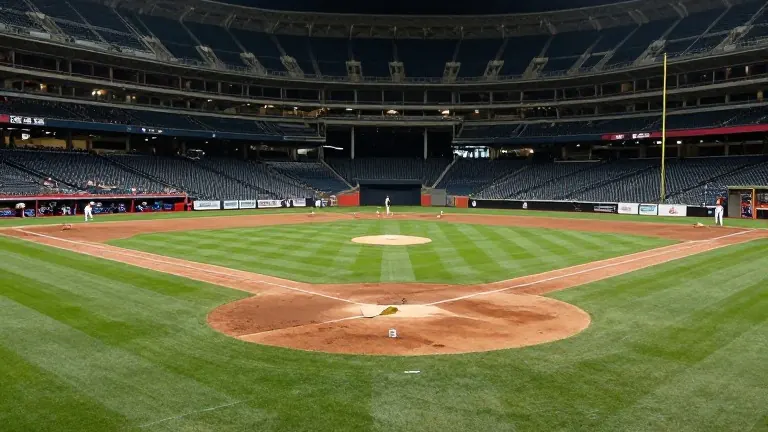
Major League Baseball owners intend to lock out players when the current collective-bargaining agreement expires at 11:59 p.m. on December 1. The primary point of contention is the owners' proposal to implement a salary cap system, a structural change that would limit how much any single franchise can spend on its roster. This marks a shift from the previous negotiation cycle, where the sides debated existing economic structures. This time, the owners argue they are reimagine the sport's financial foundation to increase franchise values through cost certainty.
The owners' initial proposal sets a salary cap at $245.3 million and a salary floor at $171.2 million. They also propose limiting the value of individual player contracts. Under this plan, baseball-related revenue would be split 50 percent to the players, excluding income from sources like real estate development. For the 2029 season, the owners suggest reducing the regular season from 162 games to 154. This reduction would accommodate a longer postseason, specifically expanding the Division Series from five games to seven. Last season, 12 teams spent below the proposed minimum, and eight exceeded the proposed maximum.
The players' union views the salary cap as a red line. They argue that a free market benefits all players, including those who do not earn top-tier salaries. The union's counterproposal includes a salary floor with no cap and a 100 percent increase in the major league minimum salary. They also seek to accelerate free agency eligibility for certain players and increase bonuses in the amateur draft. While the owners offered to raise the minimum salary and allow some players to enter arbitration or free agency earlier, the union considers these concessions viable only if the cap is removed.
The economic disparity between teams fuels the debate. The Los Angeles Dodgers spent $433 million on player salaries and $183 million in luxury tax last season, totaling $616 million. In contrast, the Miami Marlins spent $84 million total. League officials state that fan polling supports reducing payroll disparity. However, the union maintains that breaking the current system could require an entire lost season to restructure, a risk they are prepared to take to protect the free market model.
Negotiations typically stall until late in the offseason. In the 2022 lockout, the sides did not meet formally until January 13. They exchanged barbs in the press and missed initial deadlines before reaching a deal on March 10. The players voted 26 to 12 and the owners voted 30 to 0 to ratify that agreement. The season began April 7, less than two weeks later than usual, with a compressed schedule of doubleheaders to complete the 162-game slate.
This cycle carries additional financial stakes for the league. Most national broadcast deals expire after the 2028 season. If the teams lose more than 60 games due to a lockout, those contracts reportedly add an additional year. The owners view this as an opportunity to renegotiate, noting that MLB generates just over $2 billion annually. This is less than half of the NFL's $11 billion and significantly less than the NBA's $7 billion. To play 102 games, a deal must be reached by May.
Before the expiration date, both sides are expected to finalize free agent contracts. Players and owners will likely rush to sign deals before the new rules take effect. This strategy, used in 2021, allows teams to grandfather players into the current system. Owners may face questions about locking up players with contracts they believe should be restricted under a new cap. Signing bonuses will also be a point of contention, as players seek guaranteed cash before the season starts, while owners prefer to wait for ticket revenue.
If a lockout begins, players will not receive paychecks until the regular season starts. They must establish training and rehabilitation procedures early in the offseason because they cannot communicate with team staff. Employees will follow league rules by avoiding informal contact, such as group texts or holiday cards. The sides are expected to trade public statements until early January, with serious negotiations beginning only as the May deadline for a full season approaches.
Source: The Oakland Press