Bolsonaro Refuses Concession After Lula Win
The 80-year-old president defeated Senator Flávio Bolsonaro with 51.79% of the vote in a tight runoff.
By Haruka Ricci ·
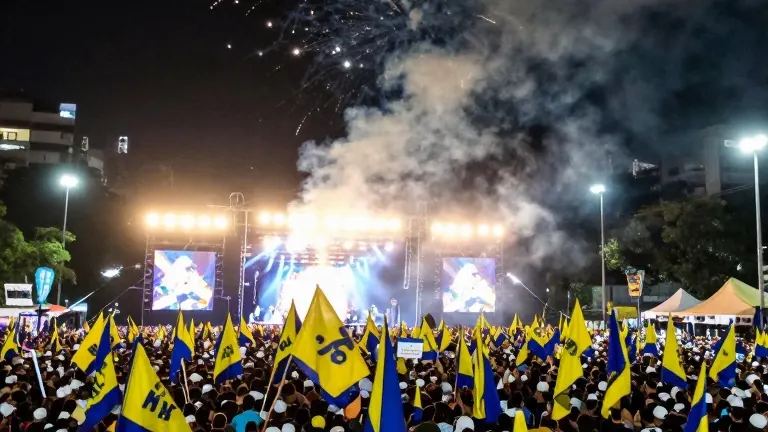
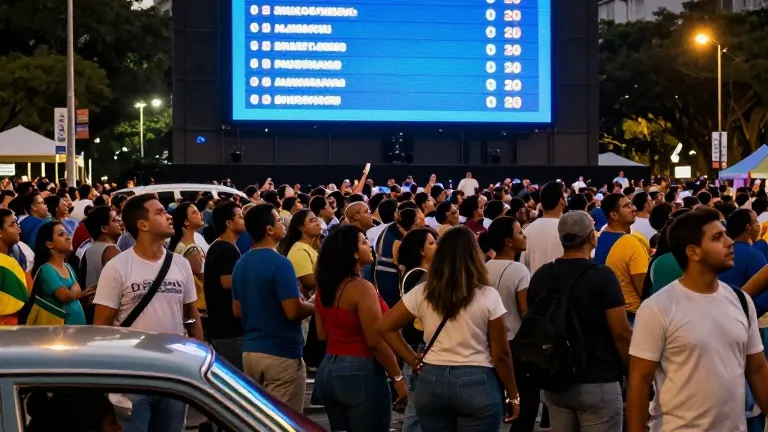
Luiz Inácio Lula da Silva secured a fourth nonconsecutive term as president of Brazil early Sunday morning, defeating far-right Senator Flávio Bolsonaro. The final tally showed Lula receiving 51.79% of the vote compared to Bolsonaro’s 48.21%. This margin translated to a difference of approximately 4.3 million votes among the 159 million Brazilians who cast ballots.
The result marked a dramatic reversal from the first round earlier this month. In that initial vote, Bolsonaro led with 56.1 million votes to Lula’s 53.8 million, or 47.03% to 45.16%. No candidate since Brazil’s return to democracy in 1985 had ever overcome a first-round deficit to win the second ballot. Polls tightened in the weeks following the first round, with the gap narrowing to fractions of a percentage point before the final count.
Lula, who turns 81 on Tuesday, called the victory a defeat for denialism. His opponent, however, refused to concede. Bolsonaro cited the decision to extend voting hours by two extra periods as a reason for his dissent, although both campaigns had requested the extension for different strategic reasons. The senator is currently 45 years old and serves as the head of the political movement established by his father, former President Jair Bolsonaro, who is serving a 27-year prison sentence for plotting a coup after losing the 2022 election.
The campaign saw intense mobilization on both sides. Progressive groups formed a WhatsApp channel called Lula’s Army to coordinate social media outreach. Lula, who recently acquired his first smartphone, began posting to Instagram and TikTok. His digital reach surpassed that of Bolsonaro for the first time. Meanwhile, the Bolsonaro campaign faced scrutiny after a dozen watchdog groups alleged that Meta favored their campaign. Brazil’s electoral court ordered Meta to stop unequal treatment of candidates, a claim the company denied as false and unfounded.
Flávio Bolsonaro’s campaign was also shaken by a scandal revealed by the magazine Piauí. The publication reported that the senator attended a boat party with sex workers and vaccine lobbyists during the peak of the 2020 coronavirus outbreak. Critics argued this event contradicted the public health messaging of his father’s administration. The first round also saw a record abstention rate of 21%, a figure more common among lower-income voters who typically support Lula.
The election outcome carries implications for Brazil’s environmental policies and its relationship with the United States. During his first term, Lula reduced deforestation in the Amazon by more than 70% and cracked down on illegal mining. Flávio Bolsonaro’s platform aligned closely with his father’s environmental stance. Lula positioned himself as a defender against what he described as colonial designs by Washington, rejecting invitations to join a Latin American coalition conducting military operations against drug cartels alongside the Pentagon.
The victory consolidates a multilateral foreign policy approach under Lula. He has maintained pragmatic relations with the United States, China, and Russia. While his win secures the short-term democratic future of the country, he will now work with a newly elected congress that includes a record number of right-wing politicians. Many of these new lawmakers are hostile to Indigenous rights and environmental protections, which may complicate the continuation of Lula’s green agenda.
International leaders began congratulating Lula immediately after the results were declared. In the United States, President Donald Trump had previously imposed 50% tariffs on Brazilian imports, calling the trial of Jair Bolsonaro a witch hunt. Lula’s victory is seen as a boost for pro-democracy campaigners globally. The result lands amid a series of high-stakes elections, including votes in Serbia, Israel, and the United States scheduled for the coming days.
Source: The Guardian