Midterm Math: How Both Parties Tried to Outmaneuver History Today
With the House in play and Senate control hanging by a thread, strategic redistricting and massive spending aimed to defy the historical trend of losing seats in midterm elections.
By Haruka Ricci ·
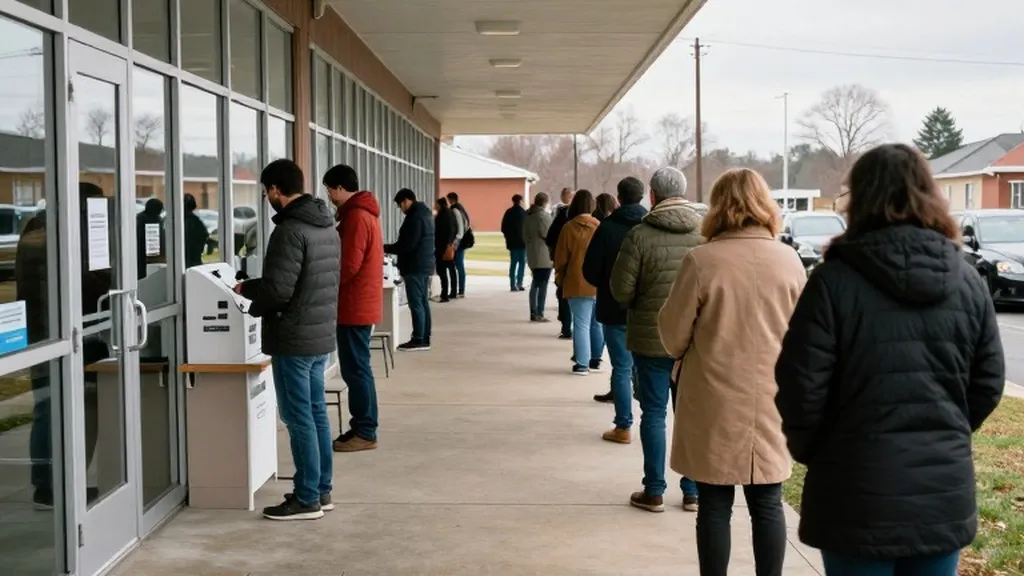
History has long dictated that the president's party loses seats in midterm elections, a pattern that has held true for decades. Today, Tuesday, November 3, 2026, that historical weight sits heavy on the shoulders of both major parties as voters head to the polls. The Associated Press describes the day as a referendum on President Donald Trump's second term, with the outcome determining who controls Congress for the remainder of his presidency. Republicans are bracing for potential losses in the House while fighting to hold the Senate, whereas Democrats are described as cautiously optimistic about their chances to take control of at least one chamber.
The stakes in the U.S. House are particularly high because all 435 seats are up for grabs. Republicans currently hold 218 seats, while Democrats hold 214. According to Ballotpedia, Democrats need a net gain of three districts to secure a majority, whereas Republicans can afford to lose no more than two seats. This tight margin means that the outcome in 46 battleground districts will likely decide the chamber's leadership. The AP notes that one or two seats could tip the balance in either direction, making every vote in these competitive districts critical to the final tally.
In the Senate, the fight is for control of the 35 seats on the ballot. Republicans hold 53 seats and Democrats hold 45, with two independents caucusing with the Democrats. Democrats need a net gain of four seats to achieve a majority, while Republicans can lose only two. The race has drawn significant attention to states like Maine, Iowa, and Georgia, where the 2024 presidential margins were relatively close. The AP highlights that economic strain and tariffs have made states like Maine competitive, despite their traditional leanings. These races are being watched closely as they could determine whether the Senate remains in Republican hands or shifts to Democratic control.
To beat the historical trend, both parties have employed aggressive strategies, including redistricting and substantial financial investment. The 2026 elections are likely to be the most expensive in history, according to the Associated Press. Republican committees outraised and outspent Democratic committees at the committee level, aided by Trump-affiliated groups and Elon Musk. However, at the candidate level, Democrats outraised their opponents. The AP analysis of AdImpact data shows that 88.1% of Republican general election TV ad spending went to states and districts that Trump won in 2024. This targeted spending reflects a strategy to solidify support in areas where the president has a strong base.
Redistricting has played a significant role in the midterm strategy, with six states using new congressional maps after mid-decade redistricting. These states include California, Florida, Missouri, North Carolina, Tennessee, and Texas, with Ohio also using a new map. The AP notes that while Republicans tried to beat the midterm pattern with these redistricting efforts, the new districts in Florida and elsewhere may not vote as they were drawn. This uncertainty adds a layer of complexity to the election, as the effectiveness of the new maps will not be fully known until the results are tallied.
The mood among voters is shaped by economic concerns and foreign policy. The AP-NORC poll indicates that 35% of U.S. adults approve of Trump's job performance, while only 25% approve of his handling of the economy. About seven in 10 say the country is heading in the wrong direction, with most blaming the president for high prices. The AP describes the election as a referendum on Trump's second term, with voters struggling with high prices and angry over an unpopular war with Iran. This sentiment is driving voter engagement, with more than 57 million people having already voted as of Monday, surpassing the early vote of four years ago in many closely watched states.
Turnout is a central focus for both parties, as it can swing the results in close races. RNC Chairman Joe Gruters stated that everything depends on turnout, asserting that if Republicans turn out their voters, they will win. Conversely, DCCC Chair Rep. Suzan DelBene said the American people are angry and want change. This emphasis on turnout is evident in the rallies and campaigns led by key figures. President Trump held dozens of rallies, ending his schedule Sunday in Salina, Kansas, where he urged voters to pretend he is on the ballot. His schedule included stops in Mississippi, South Carolina, and Texas, aiming to energize the base in key states.
Governor races are also part of the midterm picture, with 36 governorships on the ballot. Republicans hold 26 governor's offices and Democrats hold 24. Democrats would need a net gain of two governorships to achieve a nationwide majority, a feat they have not accomplished since 2010. The AP identifies several competitive governor races, including Texas, Florida, and Iowa. In Georgia, Republican health care executive Rick Jackson is facing Democratic former Atlanta Mayor Keisha Lance Bottoms. These races are seen as important for the balance of power in state governments, which can influence policy and future federal elections.
The election administration has been marked by legal and logistical challenges. A federal judge temporarily barred the Trump administration from carrying out a plan to prevent noncitizen voting, while another judge ordered the administration to stop demanding that California election officials segregate ballots cast by people on lists of suspected noncitizens. The U.S. Postal Service added hours, staff, and special lines to ensure mail ballots are counted on time. These measures aim to ensure that the election proceeds smoothly despite ongoing debates over voting rules and eligibility. The AP notes that these legal battles have added to the complexity of the election, with both parties watching closely for any developments that could affect the results.