Ten State Senate Races That Will Decide the 2026 Midterm
Voters in key states from Alaska to Texas are casting ballots in critical Senate contests that will determine congressional control for President Trump's final two years.
By Evelyn Henderson ·
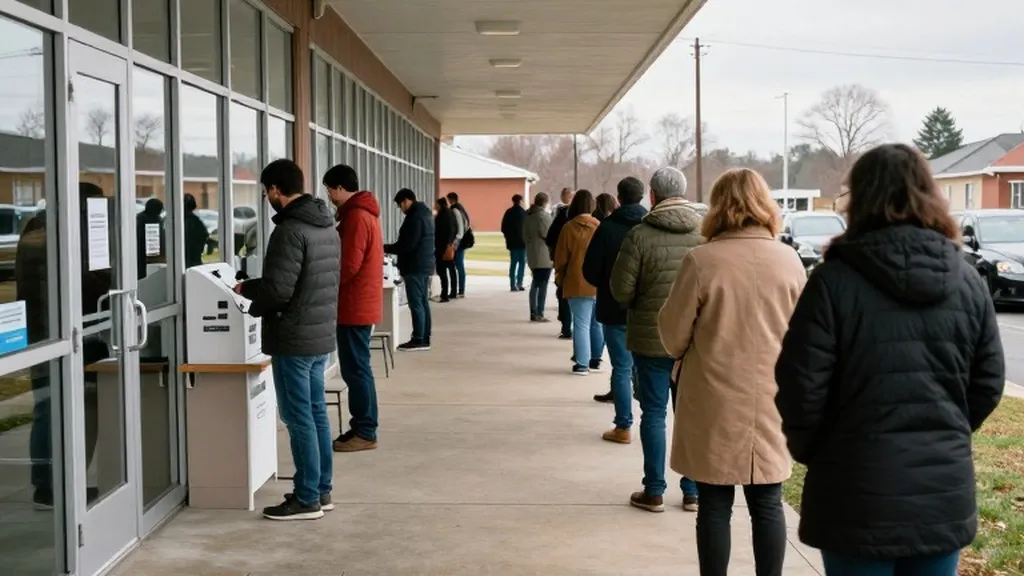
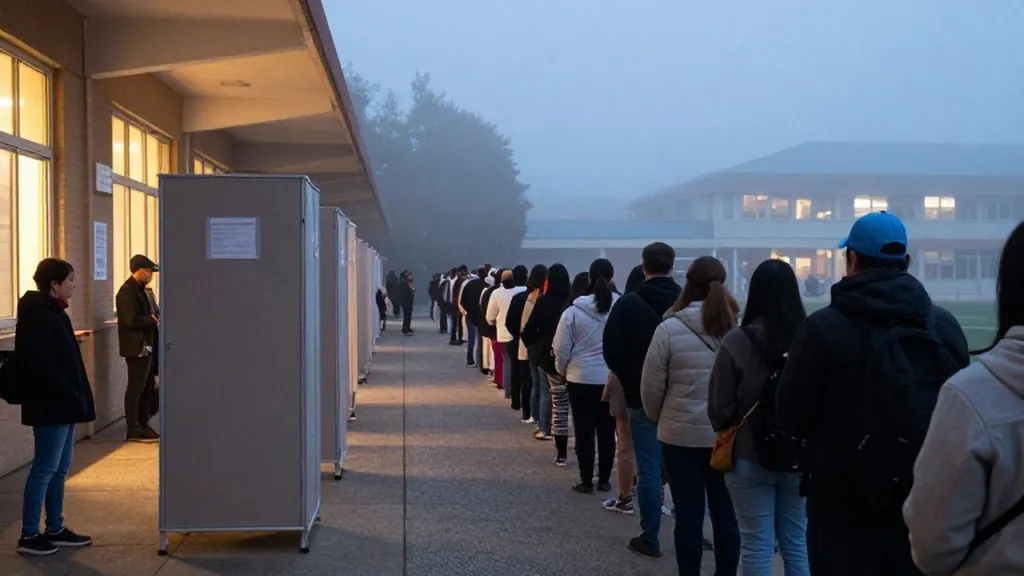
Election Day is here, and voters across the United States are deciding which party will control Congress for the remainder of President Donald Trump's second term. With polls open in all fifty states, the focus has turned to ten specific Senate races that could determine whether Republicans maintain their majority or if Democrats seize control of the chamber. These contests are not just about local issues; they are pivotal moments in the broader fight for legislative power in a midterm year where the president's party traditionally loses seats.
In North Carolina, former Governor Roy Cooper is challenging Republican Michael Whatley for the seat of retiring Senator Thom Tillis. The race is particularly notable because Tillis stepped down after public clashes with Trump, creating an open seat in a state that voted for Trump by a margin of 3.3 points in 2024. Meanwhile, in Georgia, Democratic Senator Jon Ossoff is defending his position against Republican Representative Mike Collins. Georgia is considered a lean to likely Democratic race by major polling firms, making it a critical target for those seeking a Senate majority.
The battleground extends to the Midwest, where Ohio holds a special election for the rest of the term previously held by Vice President JD Vance. Republican Senator Jon Husted is running against Democratic former Senator Sherrod Brown. Ohio is a state where Trump won by 11.2 points in 2024, and the race is viewed as a key indicator of Republican strength. In neighboring Michigan, an open seat is up after Senator Gary Peters retired. Republican former Representative Mike Rogers is facing Democrat Abdul El-Sayed in a state that Trump won by just 1.4 points. The race gained attention recently when El-Sayed's former primary opponent, Haley Stevens, endorsed Rogers on Sunday.
In Texas, the fight for the Senate seat formerly held by John Cornyn is being contested by Republican Attorney General Ken Paxton and Democrat James Talarico. Trump backed Paxton over Cornyn in the primary, signaling his preference in a state that voted for Trump by 13.6 points. This matchup is seen as a test of Republican unity in a traditionally red state. In Maine, Senator Susan Collins is running for re-election against Democratic former State Senate President Troy Jackson. The Associated Press notes that economic strain and tariffs have made this state more competitive, with all four major race ratings currently calling it a toss-up.
New Hampshire presents another open seat following the retirement of Senator Jeanne Shaheen. Democratic Representative Chris Pappas is running against former Republican Senator John E. Sununu. The state voted for Kamala Harris by 2.8 points in 2024, making it a swing state that could tip the balance in the Senate. In Minnesota, the race for the seat of retiring Senator Tina Smith features Democratic Lieutenant Governor Peggy Flanagan and Republican Michele Tafoya, a former sports broadcaster, among four candidates. Minnesota is a key northern state where Democrats hope to make gains.
Kansas has emerged as a central arena in the fight for Senate control, despite being a reliably Republican state. The race is rated as toss-up to lean Republican, and it is a state where Trump held a significant rally in Salina on Sunday. He told the crowd, "I really want you to pretend I'm on the ballot." This statement underscores the personal nature of the election for many Republican candidates who are trying to distance themselves from the president while still benefiting from his name recognition. In Alaska, the race is rated as toss-up to lean Democratic, a rare assessment for a state that Trump won by 13.1 points in 2024. The Trump administration has even filed a lawsuit related to the certification of the Senate result in this state, adding a layer of legal complexity to the proceedings.
The Associated Press describes this election as a referendum on Trump's second term, with many voters citing high prices and an unpopular war with Iran as primary concerns. AP-NORC polling shows that 35 percent of U.S. adults approve of Trump's job performance, while about 7 in 10 say the country is heading in the wrong direction. These sentiments are driving voter turnout, with more than 57 million people having already voted as of Monday. This number surpasses the early vote totals from four years ago in many closely watched states, suggesting a high level of engagement across the political spectrum.
Republican strategy has focused on holding the Senate, even if they lose the House. RNC Chairman Joe Gruters stated, "Everything depends on turnout. If we turn out our voters, we win, and that's what we've been planning for." Democrats, led by DCCC Chair Rep. Suzan DelBene, are "cautiously optimistic" and argue that "The American people are angry. They want change." The stakes are high for both parties, as a Democratic win in even one chamber would likely lead to investigations and possible impeachment proceedings. House Democratic Leader Hakeem Jeffries, who would be the first Black speaker if Democrats win the House, has outlined a 100-day agenda focused on the cost of living and oversight.
The financial aspect of the campaign is also a record-breaker, with the 2026 elections likely to be the most expensive in history. Republican committees outraised and outspent Democratic committees, aided by Trump-affiliated groups and Elon Musk, though Democrats outspent their opponents at the individual candidate level. Analysis of AdImpact data by the AP shows that 88.1 percent of Republican general election TV ad spending went to states and districts Trump won in 2024. This heavy investment reflects the confidence of the GOP establishment in holding onto their strongholds while defending the Senate.